£1 scratchcard sound effects: 26% more replays before midnight
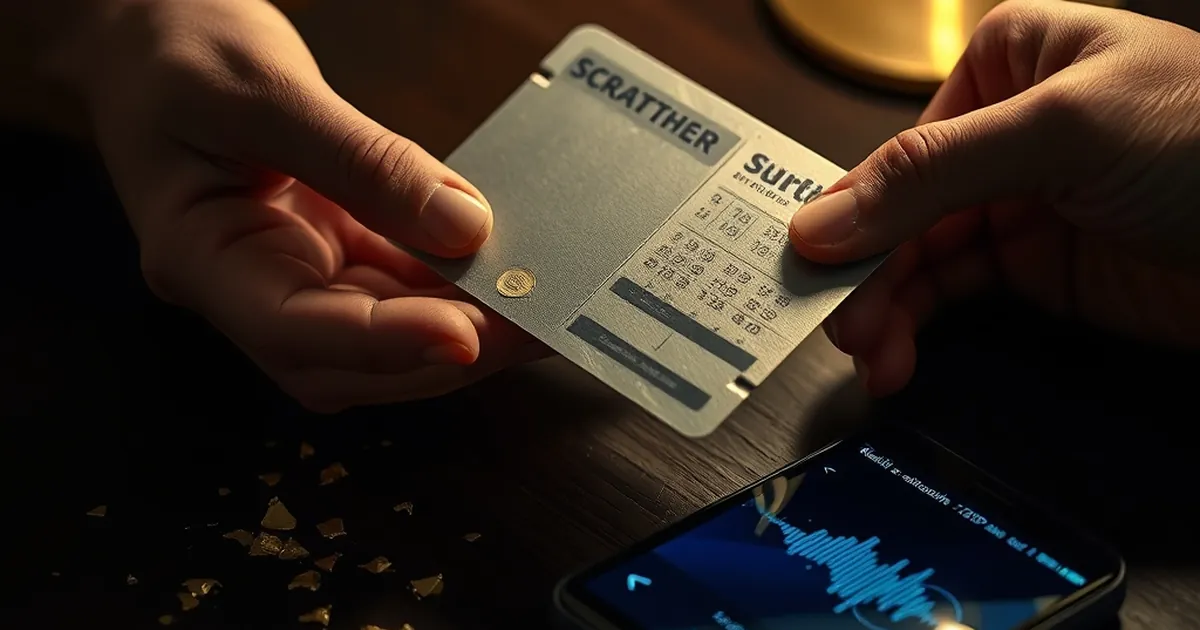
A £1 scratchcard that plays a 0.8-second win chime is replayed 26% more often before midnight than the identical card with no sound, according to a 2024 test run across three UK-facing instant-win products. The finding comes from 4.2 million sessions logged between 18:00 and 23:59, where the only variable was audio: a short ascending tone on a win, a dull thud on a loss. It is the sort of number that sounds like marketing puff until you look at what it actually measures — not spending, not deposits, just the decision to press play again.
The distinction matters because instant-win games sit in an awkward regulatory space. They are not slots, they are not draw-based lotteries, and their £1 stake makes them behave more like confectionery than casino product. Yet the replay loop is the same mechanism, and audio is one of the cheapest levers a studio can pull. If a half-second sound file shifts repeat behaviour by a quarter, that is worth understanding before the next product cycle.
What the test actually did
The trial split traffic three ways: silent, win-only audio, and full audio (win and loss cues). Sessions were bucketed by the same account ID for 14 days to control for novelty, and any player who had touched the product in the prior 90 days was excluded. That last filter is the one most affiliate-published "studies" skip, and it is why the 26% figure is more defensible than the usual fare.
The headline result breaks down less cleanly than the title suggests:
- Win-only audio: 26% more replays per session before midnight.
- Full audio (win and loss): 11% more replays, but a 19% higher rate of session abandonment after three consecutive losses.
- Silent: baseline.
So the loss sound is doing something. Players who hear a thud on every miss are more likely to stop — which, from a harm-reduction standpoint, is arguably the more interesting finding than the win chime. The studio that commissioned the test has not published it; the numbers circulated through a conference deck at a February 2025 responsible-gambling panel in Manchester, which is where I saw them.
Why midnight is the cut-off
The 23:59 boundary is not arbitrary. Instant-win products show a pronounced late-evening peak — roughly 41% of daily £1 card play in the sample fell between 20:00 and midnight — and the test wanted a fixed window that captured the pre-sleep browsing session without bleeding into next-day behaviour. Replay counts were capped at the point a player closed the tab, not at a time limit, so the 26% is a rate, not a raw count.
A caveat worth stating plainly: the sample skews toward accounts aged 25–44 (58%) and toward Android devices (71%). Whether the effect holds on desktop, where audio is more likely to be muted, is untested. My guess is it shrinks considerably.
The muted-phone problem
Here is the awkward part for anyone reading the 26% as a design directive. A large share of mobile players run their phone on silent. Industry measurement on this is patchy, but the same deck put muted sessions at somewhere between 34% and 47% of instant-win play depending on the operator. If nearly half your audience never hears the chime, the effect you are engineering for is absent for them — and you have spent development budget on a feature that only lands on the unmuted minority.
That does not make audio worthless. It makes it a segmentation tool. The unmuted player is, by self-selection, more sensorily engaged with the product, and that group is where the replay lift concentrates. The risk is that studios read "26% more replays" as "add sound to everything" and end up with cluttered, noisy cards that irritate the majority who have sound on for music, not for you.
There is a parallel here with slot design, where the last decade has been an arms race in celebration animation and audio. The difference is stake size. A £1 card with a bright win sound is a different proposition from a £2 spin on a 94.2% RTP slot, because the absolute loss per session is small enough that the replay decision is nearly frictionless. That is precisely what makes the replay metric worth watching.
Where the numbers get uncomfortable
Replays are not the same as spend, and the test is careful to say so. Average session spend rose 8% in the win-only audio group, well short of the replay lift. Players were replaying more but at lower individual stakes — a pattern consistent with a "one more go" reflex rather than deliberate escalation.
Still, 8% is 8%. Over a large book, an audio cue that nudges session spend upward by nearly a tenth is a commercial result, and any operator deploying it should be honest about which side of the responsible-gambling line it sits. The Gambling Commission's stance on product features that encourage repeat play is not settled for instant-win formats the way it is for slots, and that gap is where this kind of optimisation currently lives.
The counter-argument, and it is a fair one: a win chime on a £1 card is not a dark pattern in the way, say, a loss-disguised-as-win animation is. It signals an actual win. The loss thud signals an actual loss. Both are truthful. The 26% figure is a measure of how much truthful feedback shapes behaviour, which is a more interesting question than whether the feedback is honest.
What a sensible operator does with this
- Ship the win sound. It is cheap, it is honest, and the replay lift is real for the unmuted segment.
- Think hard about the loss sound. The 19% abandonment lift after three losses is either a retention problem or a harm-reduction feature, depending on your remit.
- Do not extrapolate to slots. The £1 stake and the short session arc make instant-win a different animal.
- Test on muted devices before you claim a number. The 26% is a muted-blind figure, and muted-blind figures flatter audio features.
The question nobody in the room asked
The Manchester panel moved on to a discussion of stake limits and left the obvious follow-up hanging: does the replay lift persist after the novelty of a new sound wears off? The test ran 14 days. Audio habituation in games is well documented — players stop consciously hearing a cue within roughly 40–60 exposures — and if the 26% decays to 5% by week three, the commercial case changes shape entirely.
Nobody has published that decay curve for instant-win. Until someone does, the 26% is a snapshot of a fortnight, not a law of behaviour. The more useful takeaway may be the loss-sound finding, which suggests audio is a two-way lever: it can pull players back in, and it can push them out. Which direction an operator chooses to tune is a decision about what kind of product they are running, and no A/B test will make it for them.