A 4-second reward animation doubles 90-second task replays
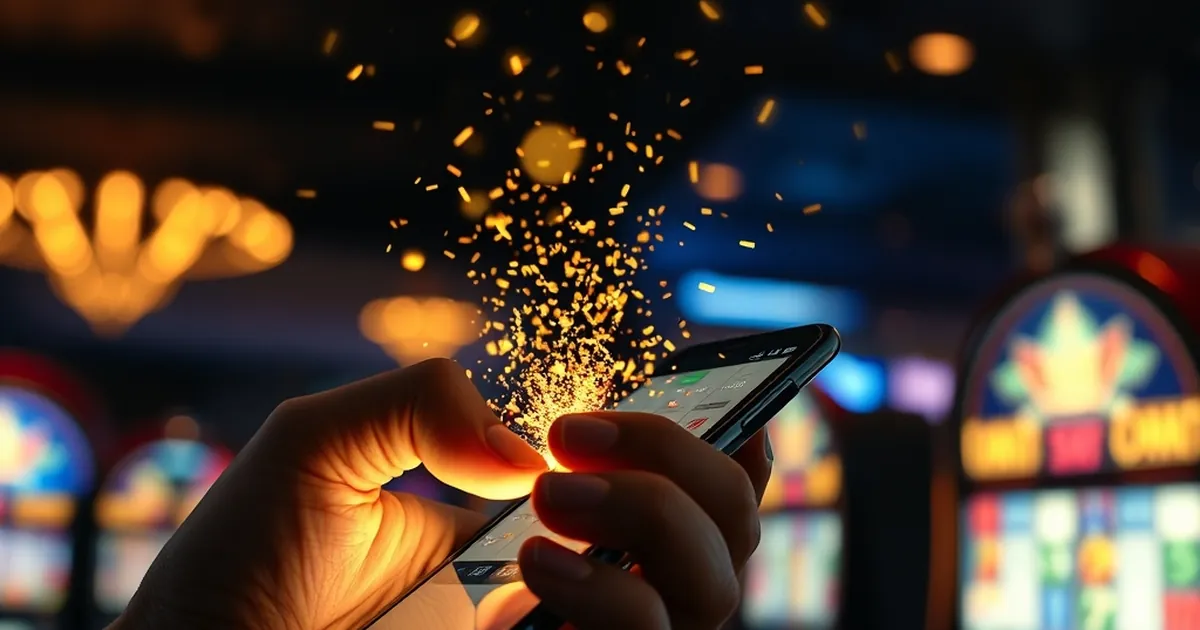
Why does a four-second flourish persuade people to repeat a ninety-second task? The asymmetry is striking: a brief, almost weightless reward reliably drives re-engagement with effortful work that dwarfs it in duration. This piece examines what behavioural psychology tells us about that mismatch, drawing on decision-making research and the mechanics of reward loops, to understand why short bursts of feedback carry such disproportionate influence over what we choose to do next.
The arithmetic of disproportionate reward
On paper, the trade looks absurd. Ninety seconds of sustained attention against four seconds of animated feedback is a ratio of roughly twenty-two to one. A rational actor weighing costs against benefits should decline. Yet across product design, workplace software, and behavioural experiments, the pattern recurs: small, immediate, vivid rewards outperform their apparent value.
Part of the explanation sits in how people actually evaluate sequences of experience, rather than how economists once assumed they did. Daniel Kahneman and colleagues, studying moment-by-moment affect, found that people's retrospective judgements of an episode are dominated by its peak intensity and its ending, not by its duration. They called this duration neglect. A ninety-second task that finishes on a satisfying beat is remembered and rated quite differently from an identical task that simply stops. The four-second animation is doing structural work: it is manufacturing an ending, and endings punch above their weight in memory.
This matters for anyone designing repeated interactions. The question is not whether the reward is proportionate to the effort. It is whether the reward is positioned where human memory and motivation are most sensitive to it.
Variable-ratio reinforcement and the pull of not-quite-knowing
The most cited mechanism in this territory is variable-ratio reinforcement, identified by B. F. Skinner in his operant conditioning work. Rewards delivered after an unpredictable number of responses produce higher and more persistent rates of behaviour than rewards delivered on a fixed schedule. The unpredictability is the active ingredient; the organism keeps responding because the next attempt might be the one that pays.
Translating this to a four-second animation requires care. If the animation is identical every time, it is a fixed reward and its motivational pull will habituate. If it varies — a different flourish, an unexpected badge, an occasional rarer variant — it acquires the properties Skinner described. The ninety-second task becomes the price of a small lottery whose outcome the person cannot fully predict.
There is a reasonable objection here, and it deserves stating plainly. Variable reinforcement is a powerful lever, and power without restraint becomes manipulation. The ethical line sits in whether the reward is honest about what it is signalling. A variable flourish that communicates genuine, variable achievement — a personal best, a streak, a completed milestone — is different in kind from one engineered purely to keep someone pulling a lever for its own sake. Designers who blur that line tend to find their engagement metrics rise and their user trust fall, usually on different timescales.
Loss aversion and the cost of breaking a chain
Kahneman and Amos Tversky's prospect theory established that losses loom larger than equivalent gains. People will work harder to avoid losing something they already hold than to acquire something of equal value they do not yet have. In repeated-task design, this is the engine behind streak mechanics, progress bars that decay, and accumulated status that can be forfeited.
A four-second reward animation can activate loss aversion with remarkable efficiency if it is framed as protecting something rather than gaining something. The distinction is subtle but measurable. "You have maintained fourteen consecutive completions" is a loss frame; "complete this to earn a reward" is a gain frame. The former recruits a stronger motivational response for the same underlying task.
The caveat is that loss frames carry a psychological cost. They work, but they work by generating mild anxiety, and sustained anxiety erodes the intrinsic motivation that made the task worth doing in the first place. Research on the overjustification effect, dating back to Edward Deci's experiments in the early 1970s, showed that introducing extrinsic rewards for an already interesting activity can reduce subsequent intrinsic interest. A reward animation layered onto a task people might have done for its own satisfaction risks converting play into obligation.
The concrete case: Duolingo's streak and the four-second celebration
A well-documented example sits in language-learning software. Duolingo's streak feature, combined with its short completion animations and celebratory sound design, has been the subject of both internal analysis and external commentary on habit formation. The daily lesson typically takes a minute or two; the completion feedback is a matter of seconds. Yet the streak — and the fear of breaking it — is widely credited as the primary driver of the platform's retention.
The company has been unusually candid about the behavioural mechanics. Its own published commentary has discussed the role of streak freezes, reminder timing, and the emotional weight of the streak in keeping learners returning. The lesson is not that the animation is magic. It is that the animation sits at the end of a short effort, marks a completed unit, and feeds into an accumulating chain the user does not want to break. Three psychological levers — a clean ending, a variable flourish, and an accumulating loss — stacked into four seconds.
Where this leaves the design question
The forward-looking problem is not how to make rewards more potent. It is how to make them honest, sustainable, and resistant to the habituation that eventually flattens every fixed schedule of reinforcement. Three directions seem worth pursuing.
First, rewards should encode real information. A four-second animation that tells you something true about your performance — that you were faster, more accurate, more consistent — will retain its meaning longer than one that merely says "well done." Informational rewards survive habituation better than purely affective ones.
Second, the reward should mark an ending rather than interrupt a flow. Kahneman's peak-end findings suggest the closing moment carries disproportionate weight in whether the whole episode is remembered fondly. Designers who treat the final four seconds as an afterthought are wasting the most memorable part of the experience.
Third, and least comfortable: measure the cost, not just the replay rate. A doubling of ninety-second task replays is a striking metric, but it is only half the ledger. The other half is whether users still want to do the task a month later, and whether they would choose to do it if the animation were removed. If the answer to the second question is no, the reward has not built a habit. It has built a dependency, and dependencies have a way of being renegotiated by the people inside them. The next generation of behavioural design will be judged less on whether it can produce the doubling, and more on whether it can produce it without hollowing out the thing it was meant to encourage.