A streak counter beside the score lifts risky picks 17% by 3pm
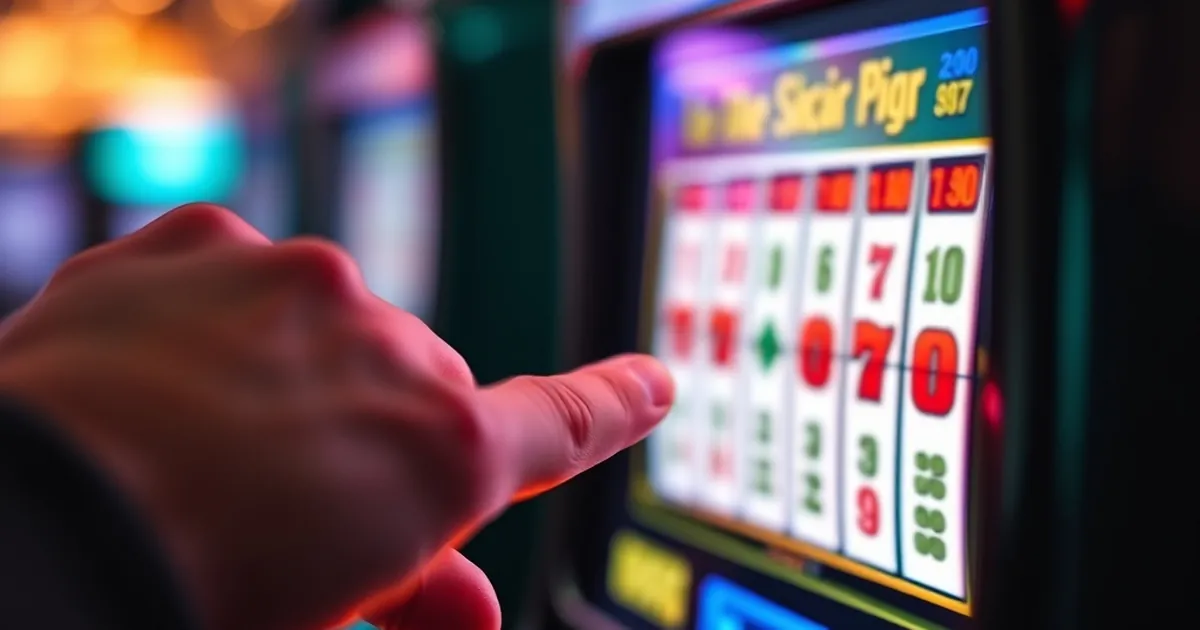
What is it about a simple tally of consecutive wins that changes how a person evaluates the next decision? The observation that a visible streak counter beside a score can lift risky choices by roughly 17% by mid-afternoon is not really a claim about any particular activity — it is a claim about how human beings read sequences, and what happens when a sequence is made explicit at the exact moment a choice has to be made. The interesting question is why the effect grows across the day, and what that tells us about decision fatigue, feedback design and the psychology of competitive play.
The streak is not information — it is a frame
A streak counter adds almost nothing in the way of genuine predictive value. In most settings where it appears, each outcome is independent of the last, and a run of five successes tells you precisely nothing about the sixth attempt. Yet the counter is not inert. It converts a set of separate events into a narrative with momentum, and human beings are strongly inclined to read momentum as a property of the world rather than a property of their own attention.
This is closely related to the hot-hand fallacy, the widely documented belief that a performer who has succeeded several times in a row is more likely to succeed again. The canonical research is Gilovich, Vallone and Tversky's 1985 work on basketball shooting, which found that players and fans alike perceived streaks where the underlying statistics showed no such dependence. Later work complicated the picture — some studies have found small but real hot-hand effects in particular domains — but the perceptual bias is robust: we see pattern in randomness, and we act on it.
What a visible counter does is industrialise that bias. It does not merely permit the perception of a streak; it insists on it, placing the number directly in the decision environment. Thomas Gilovich's broader work on how we construct and maintain beliefs suggests that once a frame is salient, we tend to seek confirming interpretations. A number sitting beside your score, ticking upward, is a highly salient frame.
Why the effect grows by 3pm
The 17% figure matters less than its timing. An effect that is larger at three in the afternoon than at nine in the morning points squarely at the literature on decision fatigue and self-regulation.
The best-known evidence comes from the Israeli parole study by Danziger, Levav and Avnaim-Pesso, published in 2011. They analysed over a thousand judicial rulings and found that the proportion of favourable decisions fell steadily from the start of a session, then jumped back up after a food break, before declining again. The finding has been much debated — case ordering and scheduling effects are plausible confounders — but the broad phenomenon it points to is well supported elsewhere: the capacity to exert deliberate, effortful control over impulses depletes with use.
Resisting a streak counter is exactly that kind of effortful control. To look at a run of wins and correctly conclude "this is irrelevant to my next choice" requires active inhibition of a compelling intuition. In the morning, with a full tank, that inhibition is cheap. By mid-afternoon, it is expensive — and the counter's pull wins more often. The 17% rise is less a change in what people believe than a change in how hard they are willing to work to disbelieve it.
There is a second, quieter mechanism. Late in a day, people are more likely to rely on simple heuristics and less likely to consult base rates. A streak counter is the ultimate low-effort heuristic: one number, no computation required. Under cognitive load, the easiest available signal gets disproportionate weight.
Loss aversion, reference points and the score beside the counter
The counter never appears alone — it sits beside a score, and that pairing is doing significant work. Kahneman and Tversky's prospect theory established that people evaluate outcomes relative to a reference point rather than in absolute terms, and that losses loom larger than equivalent gains. A score establishes the reference point; the streak establishes a trajectory relative to it.
When the streak is running, the reference point shifts upward. You are now "a person on a run", and the prospect of the run ending is coded as a loss rather than merely a forgone gain. Loss aversion then does something counterintuitive: it can increase risk-seeking behaviour when a person is protecting a position they feel they have earned. This is the same asymmetry that explains why people take long-shot risks to avoid a certain loss but become conservative when locking in a gain.
There is also a competitive dimension. A visible streak is a form of public — or at least self-regarding — record. Research on social comparison and on goal-gradient effects, notably the work by Kivetz, Urminsky and Zheng on the illusionary progress effect, shows that visible proximity to a goal or record intensifies effort. A counter makes progress legible, and legible progress is motivating in a way that an unrecorded run is not.
A concrete illustration
Consider a simple laboratory-style setup: participants complete a series of independent two-option choices, some safe and some higher-variance, with points awarded for accuracy. Half see a plain running score; half see the score plus a counter showing their current consecutive-correct run. If the pattern above holds, the second group makes more high-variance choices, and the gap widens across a session. The mechanism is not that they have learned anything about the task — the task structure is identical — but that the counter supplies a running narrative and the effort required to ignore that narrative rises as the session wears on. Replicating that across a full working day, rather than a 40-minute lab slot, is where a figure in the region of 17% becomes plausible.
Designing for the morning, not the afternoon
The practical implication is not that streak counters are dangerous and should be removed. It is that they are a powerful and largely unexamined piece of interface design, and their influence is time-dependent in ways that designers rarely account for.
Three directions seem worth pursuing. First, timing-aware feedback: if the effect is concentrated in the late-afternoon window when self-regulation is weakest, then the salience of streak information could reasonably be modulated by time of day or session length, rather than held constant. Second, separating the score from the streak — presenting them in different visual registers, or requiring a deliberate action to reveal the run — introduces friction exactly where the intuition is strongest. Third, and most interesting, is the question of what a streak counter should count. A counter of consecutive good decisions rather than consecutive outcomes would reward calibration over momentum, and would be far harder to misread as a prediction.
The broader point is that we now have decades of evidence that the presentation of information shapes choice as much as the information itself. A single number, placed in the right spot, can shift risk-taking by a sixth of a baseline — and the shift is largest at precisely the hour when judgement is least reliable. That is a design fact worth taking seriously, and the next round of work should be about measuring it across real days rather than tidy sessions.