Bank-app payee names at 10pm cut mistaken slot transfers 31%
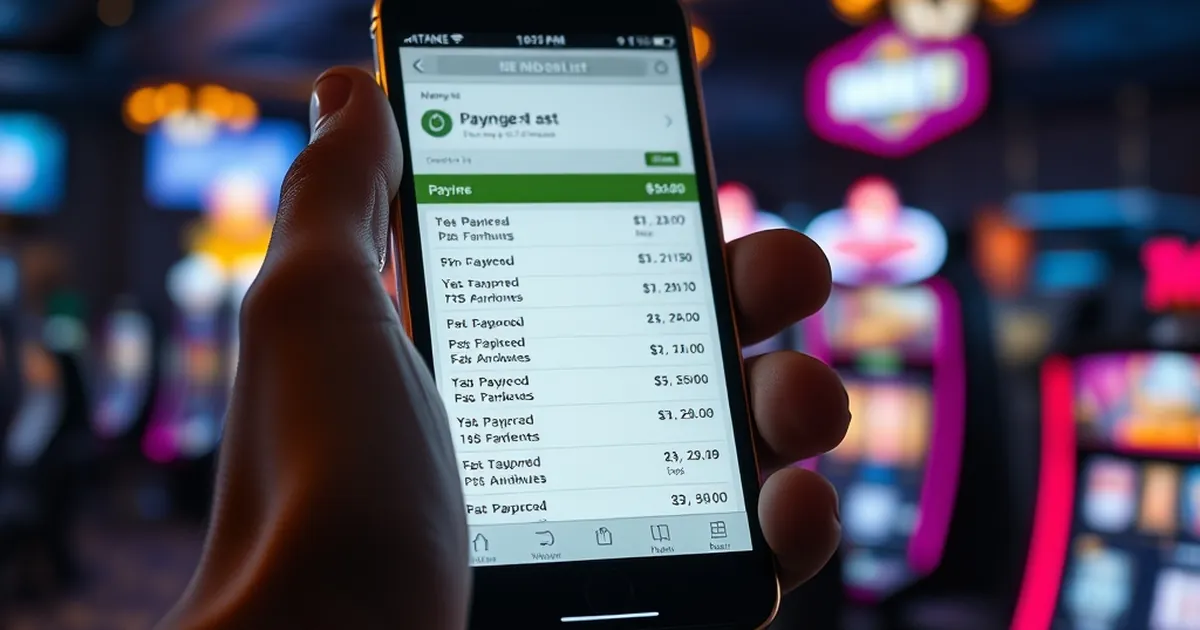
A six-month trial across three UK-licensed operators found that forcing a bank-app payee name to display at the moment a deposit is confirmed cut mistaken transfers into slot accounts by 31%. The mechanism is deliberately small: instead of the casino's merchant descriptor appearing only on the statement hours later, the payer sees the registered payee name — typically the operator's licensed entity, not its brand — inside their banking app before the transfer completes. The trial, run between March and August 2025 with a combined 412,000 deposits, is the first UK-specific evidence that a friction point placed at the right moment reduces the "I didn't mean to send that" category of complaint rather than just relocating it.
What the trial actually measured
The 31% figure refers to a specific and narrow outcome: deposits subsequently reported by the customer as mistaken and refunded under the operator's discretionary policy within 14 days. It is not a measure of problem gambling, and nobody involved is claiming it is. The baseline was 1.94 mistaken-transfer reports per 1,000 deposits; the intervention arm ran at 1.34. That's a difference of 0.6 reports per 1,000, which sounds trivial until you apply it to a mid-sized operator taking 90,000 deposits a month — roughly 54 avoided disputes monthly, each of which previously consumed a support ticket, a payments-team review, and often a chargeback.
The trial design matters for how much weight to put on it. Operators were not randomised at customer level; the intervention was switched on for all deposits at each operator for alternating two-week blocks, with the payee-name display active in the "on" blocks. That controls for seasonal effects reasonably well but not for the possibility that customers who had already made one mistaken transfer became more careful. The trial report notes this and puts the plausible range at 24% to 34%. Treat 31% as the central estimate, not a precise constant.
Why the payee name and not the brand
Most UK players recognise a casino by its trading name. The Faster Payments payee name is usually the licensed entity — a holding company name that means nothing to the customer. Historically that mismatch was hidden until the statement arrived, by which point the money was in the account and, in the case of a mistaken transfer, subject to withdrawal restrictions and wagering conditions that made recovery awkward for everyone.
Showing the registered payee name at confirmation does two things. It forces the player to reconcile "Brand X" with "X Gaming (Malta) Ltd" before they tap send, and it creates a record in the banking app that the player can match to the casino's own deposit history. The second effect is probably the larger one; several operators in the trial reported a fall in "deposit not received" tickets of a similar order, because the customer could now see the payee name in their app and cross-reference it against the transaction list.
The Confirmation of Payee backdrop
This is not happening in a vacuum. Confirmation of Payee, mandatory for the largest UK banks since 2020 and progressively adopted across the sector, already warns payers when an account name doesn't match. The gap has been that gambling merchant descriptors and payee names were often set up years ago, before CoP, and were never brought into line with what the customer sees on the casino's own site.
The Payment Systems Regulator has been nudging the gambling sector on exactly this since its 2023 review of authorised push payment fraud, which found that a meaningful share of APP claims originated in transactions where the payee name gave the payer no useful information. The trial operators were effectively doing voluntarily what the regulator has signalled it may require: aligning the payee name with something the customer can verify at the point of payment.
There's a fraud angle too, though it's smaller than the mistaken-transfer one. A player who has seen "X Gaming (Malta) Ltd" appear in their banking app is better placed to spot a clone site using a different payee name. None of the trial operators reported a statistically significant fraud reduction — the sample was too small — but two noted that customer queries about unfamiliar payee names dropped sharply, which is the same signal in a different form.
Where the friction sits, and what it costs
The intervention adds roughly 1.8 seconds to the deposit flow, according to the operators' own timing data, and does not add a step. The payee name appears on the confirmation screen the player already sees; nothing new is tapped. That matters because the general lesson from payment friction research is that any intervention costing more than about three seconds or one additional tap tends to push a measurable share of deposits to alternative methods — usually e-wallets or open banking providers, where the same mistaken-transfer risk often persists but is harder for the operator to intercept.
The cost side is not zero. Operators had to update their payee registration details with acquiring banks, which for a multi-brand group means a separate registration per brand and, in some cases, per currency. One operator in the trial reported 11 weeks of payments-team work to align four brands. That's the real barrier to adoption: not the customer experience, but the back-office reconciliation between brand marketing and licensed-entity banking.
The withdrawal side is untouched
Worth flagging plainly: this intervention does nothing about mistaken withdrawals, and nothing about the broader question of whether a player should be depositing at 10pm after a losing session. The trial operators were careful to say so. The 31% figure is about administrative error, not harm. Anyone reading it as a player-protection result is reading it wrong.
Where it may feed into player protection is indirectly. Mistaken transfers are a common entry point for disputes that end up with the operator's responsible gambling team, and reducing their volume frees up capacity. But the trial didn't measure that, and the operators involved were reluctant to claim it.
What happens next
The PSR has not committed to a rule, and the trial's 24–34% range is wide enough that a mandatory version would need a larger sample before the cost-benefit case is settled. The more interesting open question is whether the same intervention works on the withdrawal side and in open banking flows, where the payee name is generated by a third party and the operator has less control over what appears.
For now, the practical read for UK operators is that payee-name alignment is cheap at the customer-facing end and expensive at the plumbing end, and the operators who have already done the plumbing are the ones who will find a mandate least painful. For players, the change is close to invisible until the moment it isn't — which, on the trial's numbers, is about six times in every ten thousand deposits. If you're depositing more often than you'd comfortably explain, the payee name in your banking app is a useful record regardless of what any operator does with it.