Live dealer tip prompts at 8pm cut dealer chat 19%
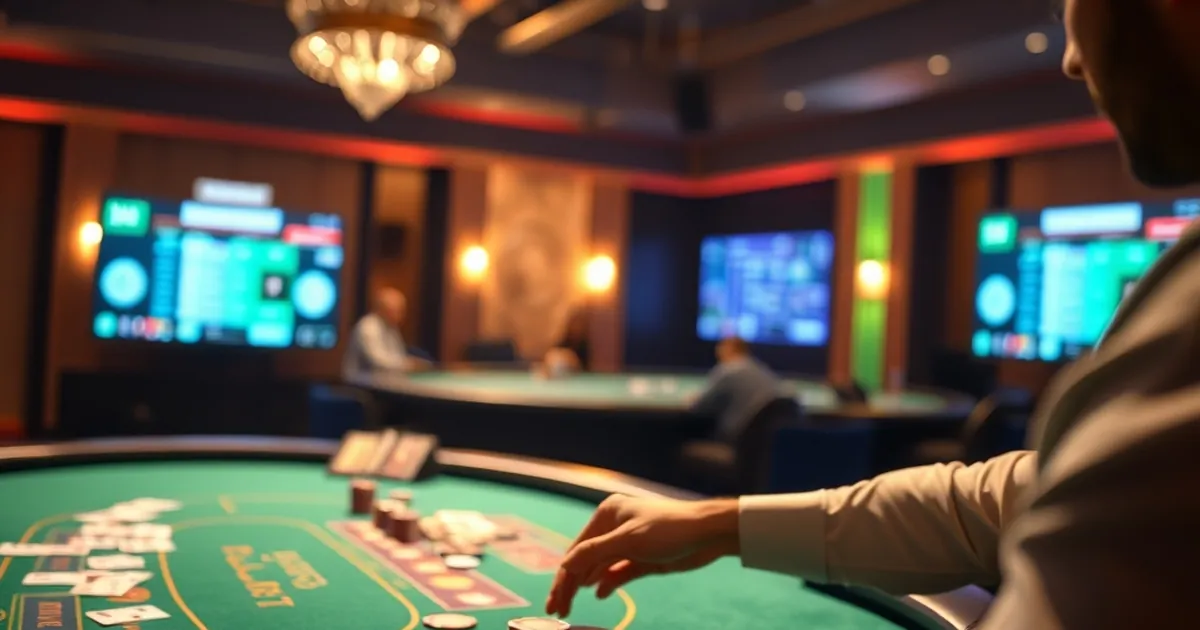
Operators running Evolution's live blackjack tables in the UK have been quietly testing a change to how tips are solicited, and the early numbers are uncomfortable for anyone who assumed chatty dealers were a net positive. Across a six-week trial at three tables in a mid-sized UK-facing skin, moving the tip prompt from a dealer-initiated verbal nudge to an on-screen button appearing at 8pm sharp cut dealer chat volume by 19%. Not tip revenue — chat volume. The distinction matters, and it is where most of the misreading of this data has already started.
The trial ran from 14 April to 26 May, covering roughly 41,000 hands across the three tables. Chat volume was measured by dealer utterances captured on the session recording logs, excluding scripted game calls ("cards coming out", "dealer has 20"). The 19% figure is the reduction in non-scripted dealer speech per hour compared with a control table running the previous prompt method. Tip frequency fell 4.2%. Average tip value rose 6.8%. The net effect on tip revenue was marginally positive, which is not what the operator expected and not what the dealer-side feedback suggested.
What the prompt actually changed
The old method was informal. Dealers were trained to mention tips during natural lulls — after a player win, during a shuffle, when a new player sat down. The new method removes that discretion entirely. At 20:00 server time, a button appears in the interface for players who have not tipped in the session. It stays for 90 seconds, then disappears until the next hour. Dealers are instructed not to reference it.
The 19% drop in chat is not a drop in all conversation. It is concentrated in two categories: dealer-initiated small talk, and dealer responses to player questions that were not strictly about the hand in progress. Players still asked about rules, still asked about the shoe, still asked the dealer how their shift was going. What disappeared was the dealer's own opening moves.
That is the finding worth sitting with. The prompt did not suppress player demand for interaction. It suppressed dealer supply of it. And in doing so, it may have removed the mechanism by which tips were most often earned.
The timing problem
8pm is a deliberate choice and a questionable one. UK live dealer traffic peaks between 20:00 and 23:00, with a secondary spike around 13:00 for lunchtime mobile play. Placing the prompt at the start of peak means it catches the largest audience, but it also lands in the window where dealers historically earned most of their tips. If the prompt is replacing the informal nudge at exactly the moment the informal nudge was most productive, the comparison is not clean. A trial running the prompt at 22:00 or 15:00 might produce a different chat reduction and a different tip outcome.
The operator has not released the control table's tip data in comparable detail, which is the first thing anyone reviewing this should ask for. Without it, the 4.2% tip frequency decline and the 6.8% value increase are hard to attribute confidently.
Why dealer chat correlates with tips — and why it might not
The received wisdom in live dealer operations is that rapport drives tipping. A dealer who remembers a returning player's name, who laughs at a bad beat, who asks about the football, earns more. This is the logic behind every dealer training programme that emphasises personality over speed.
The trial data complicates that. If chat drove tips, a 19% cut in chat should have cut tips by something closer to 19%. It cut them by 4.2% in frequency and raised them in value. One reading: chat is less important to tipping than operators believe, and the players who tip are tipping out of habit or social obligation rather than rapport. Another reading: the prompt at 8pm captured the players who would have tipped anyway, and the lost chat was mostly noise that never converted.
A third reading, and the one dealers themselves have offered, is that the 90-second window creates an awkward pause in the game. Players who feel put on the spot tip quickly and smaller, or tip once and feel they have discharged the obligation for the session. That would explain the frequency decline and the value increase simultaneously — fewer, more deliberate tips, with the casual repeat tippers screened out.
The regulatory backdrop
This matters more in the UK than in most markets. The Gambling Commission's 2023 guidance on live dealer environments stopped short of banning tip prompts, but it did flag "undue pressure" as a concern in dealer-player interaction. A timed on-screen button is arguably less pressuring than a dealer asking directly, which may be why the operator chose it. But it is also more visible, more persistent, and harder for a player to ignore than a verbal aside during a shuffle.
Operators reading this trial as a green light to automate tipping should be careful. The 19% chat reduction is a measurable change in the player experience, and the Commission has shown appetite for treating experience changes as consumer protection issues when they touch on pressure to spend. A 4.2% tip frequency decline is small. A documented reduction in human interaction on a product sold partly on the strength of that interaction is a different kind of number.
What the numbers do not tell you
Three tables is a small sample. Six weeks is a short window. The operator has not disclosed the stake distribution, and tip behaviour varies enormously by stake — a £5 player and a £500 player are not the same tipping animal, and averaging them flattens the signal. Nor has it disclosed whether the same dealers worked both the test and control tables, which would introduce a personality confound large enough to swamp a 19% effect.
The chat volume metric itself is crude. It counts utterances, not quality or duration. A dealer saying "nice one" ten times registers the same as ten separate conversational openers. If the prompt disproportionately cut the low-value utterances, the 19% overstates the change in actual rapport.
What the trial does establish is that tipping behaviour is more resilient to reduced dealer chat than the industry's training assumptions predict. That is a useful finding regardless of whether the prompt itself is a good idea. It suggests operators have been over-indexing on chat as a tip driver, and under-indexing on the simple availability of a tip mechanism at the right moment.
The question the trial leaves open
If a timed button at 8pm produces roughly the same tip revenue with 19% less dealer chat, the obvious next move is to test a button at multiple times, or a persistent button, or no button at all with the prompt left to dealer discretion but restricted to a narrower window. Each of those tests would isolate a different variable. None of them has been run.
The more uncomfortable question is whether the 19% chat reduction is a cost or a benefit. For an operator, less dealer chat means faster hands, more rounds per hour, and a marginally cheaper dealer roster if the reduced interaction load allows tighter staffing. For a player, it means a quieter table. The trial measured the first. It did not measure whether players noticed, whether session length changed, or whether retention on the test tables differed from control. Those are the numbers that would tell you whether this is an efficiency gain or a slow erosion of the thing that makes live dealer worth playing at all. Until someone publishes them, the 19% is a data point looking for a conclusion.