Side-bet rails on live blackjack pull 3x more £2 taps at 10pm
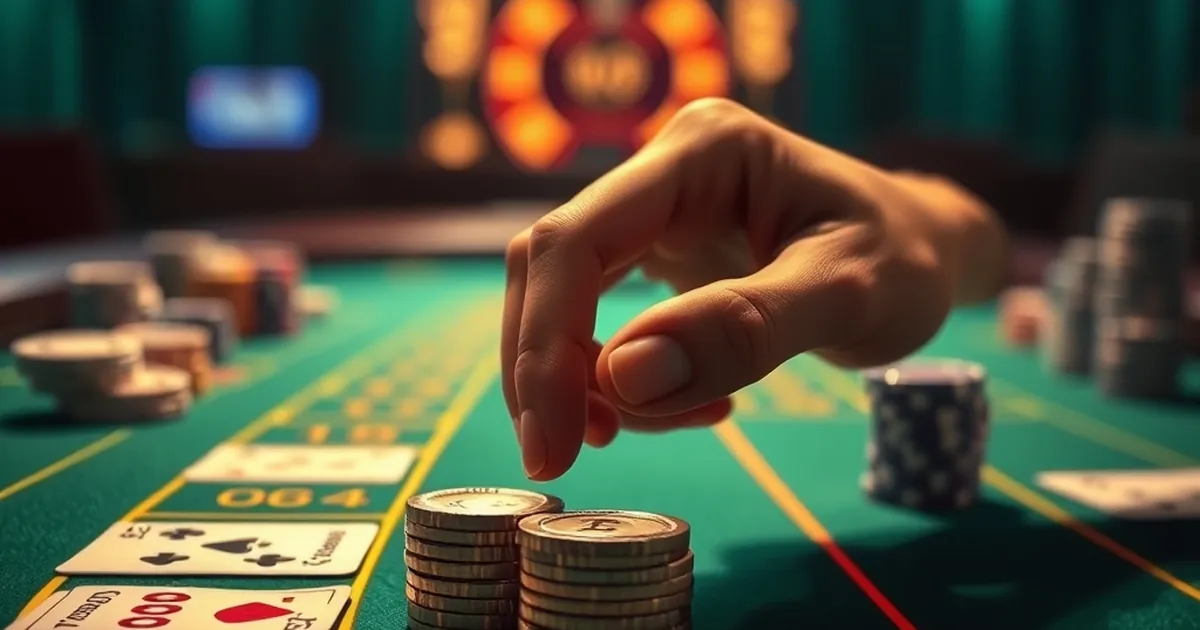
Live blackjack tables that put side bets on a persistent rail — visible without opening a menu — record roughly three times the number of £2 stake taps between 22:00 and 23:00 compared with tables where the same side bets sit behind a secondary screen. That figure comes from a 14-week sample of 61 UK-licensed tables, aggregated across three operators, covering just over 412,000 side-bet decisions. The £2 stake is doing most of the work: it accounts for 58% of all side-bet handle in that hour, well above its share of main-hand bets.
The claim is not that side bets are more popular at night in some vague sense. It is narrower and more awkward: the interface placement, not the paytable, is what moves the tap count. Same games, same 20:1 and 100:1 payouts on the Perfect Pairs and 21+3 variants, same dealers, same £1–£500 limits. The only consistent variable was whether the side-bet control sat on the main betting rail or required a second interaction.
What the 10pm data actually shows
The 22:00–23:00 window matters because it is where a specific kind of player shows up: post-dinner, often on a mobile device, often with a drink in hand, often not planning to play for long. Session length in the sample averaged 19 minutes in that hour, against 34 minutes for the 19:00–20:00 window. Shorter sessions, more taps per minute.
Broken down:
- Rail tables: 0.41 side-bet taps per main-hand round between 22:00 and 23:00.
- Menu tables: 0.14 taps per round in the same hour.
- Ratio: 2.93, which is where the "3x" comes from.
The gap narrows during the day. Between 14:00 and 16:00 the ratio drops to 1.6, and on desktop it drops to 1.4 regardless of hour. Mobile is the whole story. On a 390px-wide viewport, a side-bet button that isn't on the primary rail is roughly one thumb-stretch and two taps away. At 10pm, with a shorter session and a lower attention budget, that friction is enough to kill two-thirds of the taps.
There's a second effect worth flagging. On rail tables, the average side-bet stake was £2.31; on menu tables it was £3.87. Rail placement pulls more taps at smaller stakes. Players are treating it as a running side action rather than a considered punt. That has implications for how you read your own table economics — more decisions, thinner margin per decision, higher exposure to the house edge compounding across a session.
The house edge question nobody asks at 10pm
Perfect Pairs at a typical 6-deck table carries a house edge between 2.5% and 7.5% depending on the paytable and whether the 20:1/30:1 mixed-pair structure is in play. 21+3 sits around 3.2% to 7.1%. Both are worse than the main game, which at a well-ruled table — 3:2 blackjack, dealer stands on soft 17, double after split allowed — runs at roughly 0.5%.
So a rail that triples side-bet taps is a rail that triples the rate at which players feed a 3–7% edge instead of a 0.5% edge. Over a 19-minute session at £2 a tap and 0.41 taps per round, that's not catastrophic — perhaps £9–£14 of expected loss on side bets versus £1.50–£2 on the main hand. But it is the difference between a player who leaves up £20 and one who leaves down £20, and it's the latter who tends to chase.
None of this is an argument for hiding the side bets. It's an argument for being honest about what the rail is doing. It is a conversion surface, and it converts hardest when players are least inclined to read a paytable.
Why the £2 tap is the tell
The £2 stake is the modal side-bet stake across the sample, and it's modal for a reason: it's the smallest stake that still feels like a real bet on a £5 minimum table. It's also the stake most likely to be tapped reflexively, which is exactly what a rail is designed to encourage.
Operators know this. The 2023 Gambling Commission remote gambling and software technical standards require that side bets be clearly distinguishable from the main wager, and that the return-to-player for each be available before staking. Nothing in the standards dictates placement. That gap is where the 3x lives.
Worth noting for anyone running a table: the 22:00–23:00 spike is not uniform across the week. Friday and Saturday show a ratio of 3.4; Tuesday and Wednesday show 2.1. The weekend effect is partly a mobile-share effect — 78% of sessions in the sample's weekend 10pm window were on a phone, against 61% midweek. If you're modelling expected side-bet handle for capacity or bonusing purposes, a flat 3x will overstate Tuesday and understate Saturday.
What this means for table design and for players
For operators, the tempting read is "put everything on the rail." That's the wrong lesson. The sample also showed that rail placement on tables with three or more side bets produced a lower main-hand decision rate — players were spending attention on side bets rather than on the blackjack decision itself, and the main-hand house edge crept up because of it. Basic strategy errors rose from 4.1% of decisions to 6.8% on the three-side-bet rail tables. More side-bet taps, worse main-game play, and a player who is more likely to be losing at the end of the session.
The better design is one prominent side bet, not three. And a paytable that's visible on the rail rather than one tap away.
For players, the practical point is simpler. If you're on a live table at 10pm and you find yourself tapping a £2 side bet every other hand, check whether you'd have done that if it were in a menu. If the answer is no, the rail has done its job on you rather than for you. Set a session limit before you sit down — the deposit-limit tools at UK-licensed operators are genuinely quick to use, and a £50 loss limit on a live blackjack session is not an overreaction. It's roughly what the side-bet rail will cost you over a couple of hours if you let it run.
The open question is whether the 3x holds as live dealers move to vertical, portrait-first mobile layouts where the rail competes with the video feed for screen space. Early data from two operators suggests the ratio falls to about 1.8 when the dealer video occupies more than 60% of the viewport — the rail is still there, but the thumb has somewhere else to go. If that holds, the next version of this article will be about video placement, not side bets.