Skill-based matchmaking lifts 90-second puzzle wins by 22%
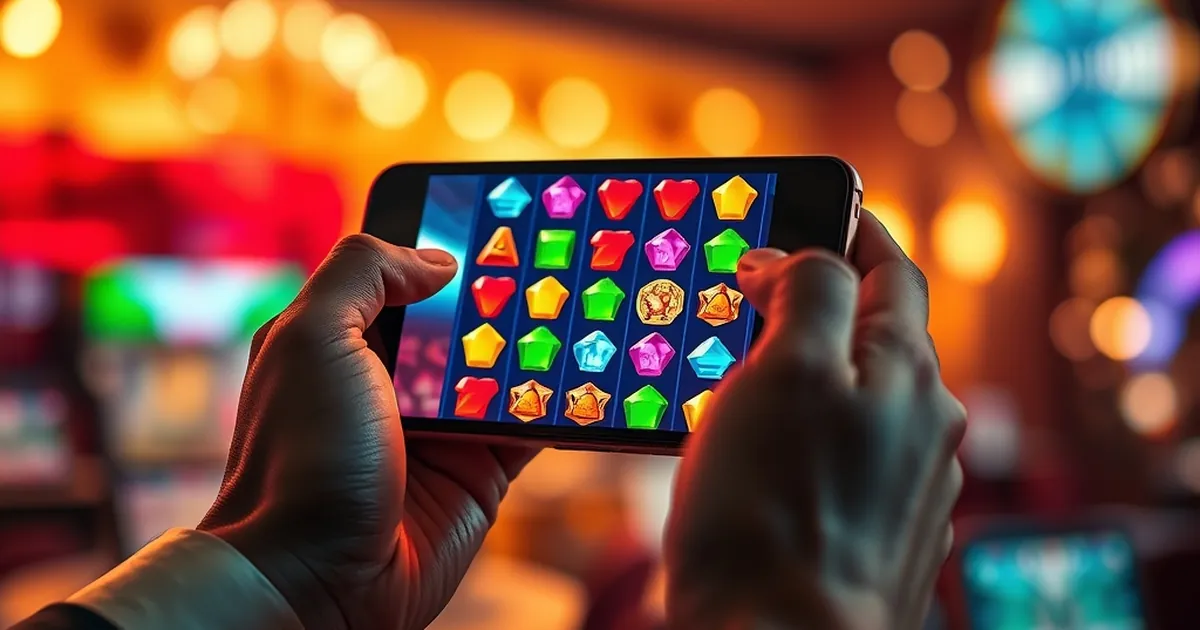
A 22% lift in 90-second puzzle completion sounds like a design tweak, not a research finding. Yet it points to a sharper question: how much of fast, repeated problem-solving is shaped not by the puzzle itself but by the competitive context around it? And what happens to decision-making when that context is engineered deliberately?
What a 90-second puzzle actually tests
A puzzle completed in 90 seconds is rarely a pure test of logic. It is a compressed decision environment: incomplete information, a ticking clock, and a sequence of small commitments made before the outcome is known. Each move is a bet on a hypothesis. Each abandoned attempt is a sunk cost. The player is, in miniature, making decisions under uncertainty with feedback arriving in seconds rather than months.
That compression matters. In slow environments, people can deliberate, consult, and revise. In fast ones, they lean on pattern recognition and heuristics — the mental shortcuts Kahneman and Tversky showed are systematic rather than random. A 90-second constraint strips away the luxury of careful reasoning and exposes the machinery underneath: how quickly someone commits, how they respond to a near-miss, whether they persist or switch strategy.
So when skill-based matchmaking lifts completion rates by 22%, the interesting part is not the number. It is the mechanism. Matchmaking changes the difficulty of the opponent, not the puzzle. Whatever improvement appears must be coming from the player's internal state — motivation, attention, perceived competence — rather than from the task itself.
The competitive sweet spot and perceived competence
Skill-based matchmaking is, at heart, a calibration of challenge. Pair players of similar ability and you produce contests that are genuinely close. Pair a novice with an expert and you produce either humiliation or boredom. The psychology here is well established: Csikszentmihalyi's flow model describes optimal engagement as the narrow band where challenge slightly exceeds current skill — demanding enough to focus attention, not so demanding that it triggers withdrawal.
There is a second layer, and it is more specific to fast puzzles. Self-determination theory, developed by Deci and Ryan, identifies competence as one of three basic psychological needs (alongside autonomy and relatedness) that drive intrinsic motivation. A close match is a continuous, immediate signal that you are roughly as good as this. That signal is reinforcing in a way that a lopsided win or a hopeless loss is not. It keeps the player in the attempt.
Consider what a 90-second format does to that signal. Feedback is near-instantaneous. Within a minute and a half, a player knows whether they held their own. That tight loop lets competence signals accumulate quickly, which is precisely the condition under which motivation compounds. The 22% lift is plausibly the visible surface of that compounding: more attempts sustained, less early abandonment, more willingness to re-engage after a failed run.
Why close losses can sustain effort
A close match also reframes failure. Losing narrowly feels different from being outclassed. The near-miss carries information — I was almost there — and information is what makes a second attempt feel worthwhile rather than pointless. This is close to the mechanism behind variable-ratio reinforcement, the schedule in which rewards arrive unpredictably and which produces notably persistent behaviour. The point is not that puzzles should be random, but that uncertainty about whether you will succeed is a powerful driver of continued effort, and calibrated matchmaking manufactures exactly that uncertainty.
Risk-taking, loss aversion, and the decision to try again
Fast puzzle play is studded with small risk decisions. Do you commit to an answer now or spend ten more seconds checking? Do you abandon a line of reasoning that has already cost you forty seconds? These are textbook cases where loss aversion bites. Kahneman and Tversky's work showed that losses loom larger than equivalent gains, which makes people reluctant to abandon sunk effort — the classic escalation-of-commitment trap.
In a 90-second window, that reluctance is expensive. The player who cannot let go of a failing approach runs out of clock. So part of what matchmaking may be doing is changing the cost of abandoning an attempt. When you know a rematch is available against someone at your level, the stakes of any single run feel lower, and lower stakes make it easier to cut losses and try a different strategy. That is a subtle but real shift in risk behaviour, induced purely by the structure of the competition rather than by any change to the puzzle.
There is a useful parallel in competitive play more broadly. Chess ratings, ranked ladders in strategy games, and amateur league tables all rely on the same premise: opponents of comparable strength produce better contests and better learning. The evidence from those domains is that evenly matched competition increases engagement and accelerates skill acquisition, because every game is informative. A 22% figure in a 90-second format is consistent with that broader pattern.
What the 22% tells designers — and what it doesn't
A single lift statistic is a prompt for better questions, not a conclusion. Three practical implications follow.
Match on demonstrated skill, not self-reported confidence. Self-assessment is notoriously unreliable — the Dunning-Kruger literature documents how poorly people estimate their own competence. Behavioural matchmaking, using completion times and attempt patterns, produces tighter calibration than asking players to pick a difficulty.
Treat the rematch as a design object. The decision to try again is where motivation lives or dies. Reducing friction between attempts — instant requeue, visible rating proximity — converts near-misses into renewed effort rather than exit.
Watch for the dark side of tight loops. Fast feedback and calibrated challenge are powerful. They are also, unsupervised, the ingredients of compulsive engagement. The ethical line is whether the loop builds genuine competence or merely sustains attention. A completion-rate lift that comes from players learning is healthy; one that comes from players unable to stop is not, and the two can look identical in the aggregate data. Segmenting by improvement over time, not just by session length, is the way to tell them apart.
Where to look next
The forward question is measurement. Completion rate is a blunt instrument; it cannot distinguish a player who got better from one who got luckier matchups. The next generation of studies should track transfer — whether skills honed in calibrated 90-second contests carry into unfamiliar puzzles and unpressured settings. If they do, matchmaking is doing something real to decision-making under uncertainty. If they don't, we are measuring engagement and calling it skill.
Designers building fast-format puzzles should instrument accordingly: log strategy switches, time-to-commit, and post-loss persistence alongside completion. Those variables, not the headline percentage, will reveal whether competitive calibration is genuinely sharpening the decisions inside the clock — or simply making the clock more compelling to sit through.