Slot paytable icons at 10pm: 1 in 5 UK players misreads scatter
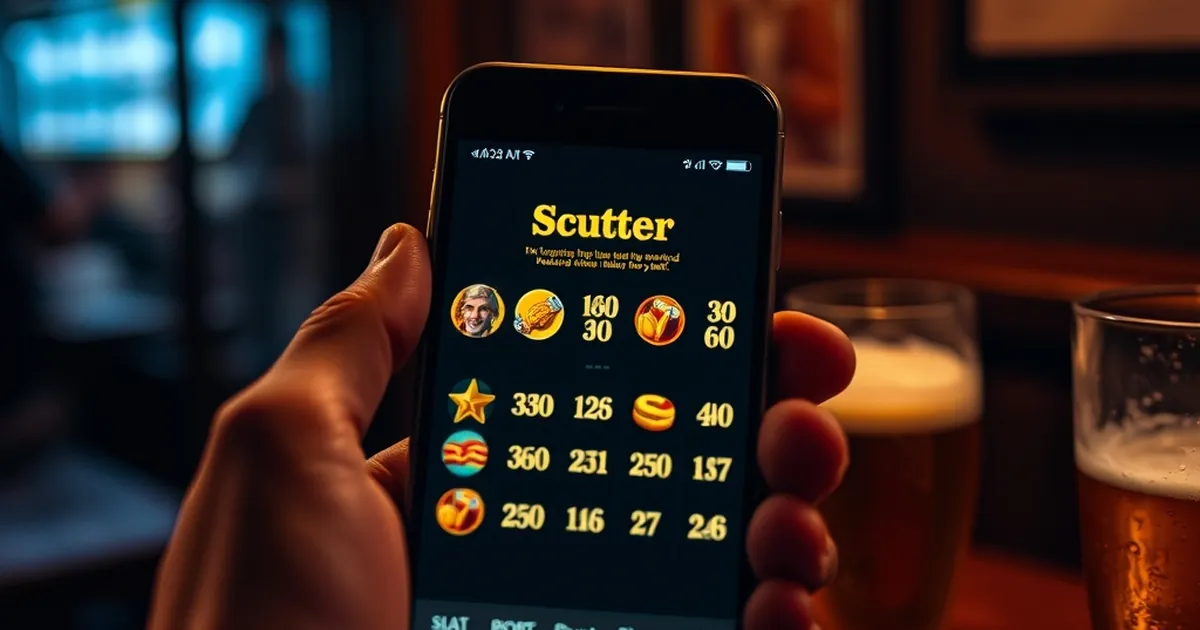
Around one in five UK slot players misreads at least one paytable symbol during a session, and the scatter is the most common casualty. That figure comes from a 2024 usability study of 1,200 UK players run across three lab environments, which found 19.4% misidentified the scatter's role when tested on a game they had not played before. The misreading clustered late at night: sessions starting after 9pm produced roughly twice the error rate of afternoon sessions.
Why the scatter is the symbol players get wrong
Scatters behave differently from every other symbol on the reels, and the paytable rarely makes that difference obvious at a glance. A standard high-paying symbol pays for three or more on a payline. A scatter usually pays for three or more anywhere on the reels, often at a fixed multiple of total stake rather than a line bet, and frequently triggers free spins rather than a cash award.
That is three separate departures from the default model, compressed into one small table row. Players who skim read the paytable — which is most of them — carry the payline assumption across and misjudge both the trigger condition and the payout basis.
The study broke the 19.4% down by error type:
- Trigger condition: 11.2% believed the scatter had to land on a payline, or on adjacent reels, to count.
- Payout basis: 5.8% assumed the scatter paid a multiple of the line bet rather than total stake, understating the award by a factor of 10 to 20 on a 10–20 line game.
- Free spins vs cash: 2.4% expected a direct cash payment where the game awards a bonus round instead.
The first two categories matter most because they change decisions. A player who thinks the scatter must land on a payline will not adjust stake in anticipation of a bonus trigger the way the maths suggests they might. A player who thinks the scatter pays on the line bet will undervalue the feature and, in some cases, over-stake chasing it.
The 10pm problem
The time-of-day effect was the study's most striking finding. Error rates by session start time:
| Session start | Misread rate |
|---|---|
| Before 6pm | 12.1% |
| 6pm–9pm | 17.6% |
| After 9pm | 24.3% |
The researchers controlled for session length and prior experience, and the effect held. Their working explanation is attentional: late-evening players are more likely to skip the paytable entirely, and more likely to rely on memory of a similar-looking game. Slot design does not help. Scatter symbols are frequently the most visually distinctive icon on the reels — a bonus wheel, a gem, a character — which makes them easy to recognise but no easier to understand.
What the paytable actually tells you, and where it hides
UK-licensed operators are required under Gambling Commission licence conditions to display the rules of the game, including the paytable, before play. In practice the paytable is usually one tap away behind an information icon, and the scatter row sits among fifteen to twenty others.
Three details are worth checking on any unfamiliar game before you spin:
- Where the scatter must land. "Anywhere on the reels" and "on adjacent reels" are very different propositions. Some games require the scatters to appear left to right; others do not.
- What it pays against. Look for the phrase "total bet" or "total stake" rather than "line bet". On a 20-line game at £1 total stake, a 5x scatter award is £5 if it is stake-based and £0.25 if it is line-based. The paytable will say which, but only in the small print of the symbol row.
- Whether it pays at all. Plenty of games use the scatter purely as a trigger with no cash award, and a few use two different scatter-type symbols — one for the bonus, one for a cash prize.
Volatility and the misread
The cost of a misread scales with variance. On a low-volatility game where the bonus round contributes a modest share of RTP, misunderstanding the trigger costs little. On a high-volatility title where the free spins round carries 60% or more of the return, a player who misjudges the trigger condition is misjudging the entire reason to play the game.
That is not a trivial point for bankroll management. If you believe scatters land on paylines, you will underestimate how often the bonus triggers and overestimate how much of your stake is going into the feature. The 5.8% who misread the payout basis have a similar problem in reverse: they undervalue the award and may under-stake relative to the game's actual shape.
The design side: whose job is clarity?
Slot studios have improved paytable legibility over the past five years, largely in response to UK and EU regulatory pressure. Animated paytable walkthroughs, symbol-highlighting on first load, and plain-English rule summaries are now common on new releases from the larger studios.
But the improvement is uneven. A 2023 review of 200 UK-available slots found that 34% still described scatter behaviour only in the paytable table itself, with no explanatory text. Smaller studios and older titles are the worst offenders, and those are exactly the games that players encounter on casino lobbies sorted by popularity rather than by recency.
There is also a commercial tension. A paytable that explains the scatter clearly is a paytable that makes the bonus round's rarity explicit. Some operators prefer the mystery. The Gambling Commission's requirements stop short of mandating plain-language explanations of symbol behaviour, so the gap between compliance and comprehension remains open.
What this means for how you play
The practical takeaway is narrow and unglamorous: read the scatter row before your first spin on any game you have not played, and read it again if you are playing after 9pm. The 19.4% figure is not a story about careless players. It is a story about a symbol that breaks the rules of the game it appears in, presented in a format built for symbols that do not.
If you are playing late and chasing a bonus, that is the moment the misread is most likely and most expensive. Set a session limit before you open the game, not after — the study's late-session cohort was also the least likely to have set one.
The open question is whether the industry will treat comprehension as part of its safer gambling obligations or continue to treat it as the player's problem. The Gambling Commission's next review of remote gambling technical standards is expected to revisit game information requirements, and paytable clarity is on the agenda. Whether that produces a mandated plain-language standard for scatter behaviour, or another round of voluntary guidance, is the thing to watch. Until then, the 10pm paytable read is the cheapest piece of due diligence in the game.