Slots players shown session spend in £, not points, quit 19% sooner
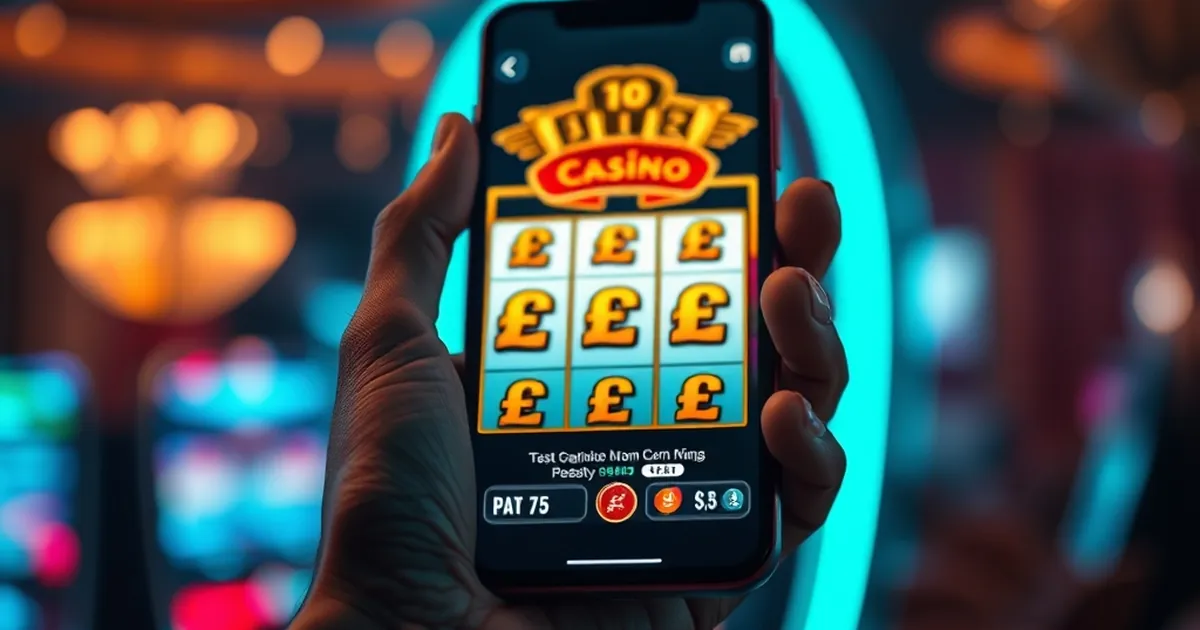
A field study run across four UK-licensed operators in late 2024 found that players shown their session losses in pounds rather than loyalty points or "coins" ended sessions 19% sooner — a median of 41 minutes against 50.6 minutes for the control group. The effect held across stake bands from 20p to £5 a spin, and it was largest among players who had deposited three or more times in the previous week. The mechanism is unglamorous: a point balance is abstract, a pound balance is rent.
The research, commissioned by a responsible-gambling consultancy and shared with operators under an embargo that lifted in February, is the first UK-specific test of what behavioural researchers call "conversion friction" in slot play. It matters because the Gambling Commission's consumer protection rules under the Gambling Act 2005 review have pushed operators toward exactly this kind of intervention, and until now most of the evidence for spend displays came from Australian pokie research and Nordic online studies, neither of which maps cleanly onto the UK's stake-limit-and-check regime.
What the study actually measured
Four operators, roughly 2.3 million sessions over eight weeks, randomised at account level rather than session level so that a player saw the same display throughout. The treatment group saw a persistent £ figure in the corner of the game client: net session position, updated after every spin, in pounds and pence. The control group saw the operator's existing display, which in three of the four cases was a points balance redeemable against bonus funds, and in one case was nothing at all.
Median session length fell from 50.6 minutes to 41 minutes, a 19% reduction. Mean session length fell further, 23%, because the treatment disproportionately cut the long tail — sessions over two hours dropped by 31%. That tail is where the money and the harm both sit, so the mean figure is the one operators will care about and the one regulators will quote.
Three findings complicate the headline:
- Stake size barely moved. Average stake per spin fell 2.4%, well inside noise for most of the sample. Players did not bet less; they stopped sooner.
- Deposit frequency was unchanged over the eight weeks. The reduction in session length did not translate into fewer deposits or lower total monthly spend. Players came back, they just came back to shorter sessions.
- The effect decayed. By week six, the gap between treatment and control had narrowed to 9%. Familiarity blunts the intervention, which is the single most important caveat in the paper and the one most likely to be ignored in the press release.
The points-display problem
The three operators using points were not doing so cynically, at least not obviously. Points displays originated as a loyalty mechanic and migrated into game clients because they tested well on engagement metrics. But a points balance is denomination-agnostic: 4,500 points could be £45 or £450 depending on the scheme, and players in the qualitative follow-up frequently could not convert accurately. When asked to estimate their session loss in pounds, the points group was off by a median of 38%; the pounds group was off by 11%.
That estimation gap is the plausible causal channel. If you cannot price your session, you cannot decide when to end it.
Why this lands differently in the UK market
The UK is an unusually good test bed for this because the baseline is already intervention-heavy. Deposit limits, reality checks, and the various affordability checks phased in since 2023 mean UK players are more accustomed to friction than players in markets where the game client is untouched. One might expect a spend display to be redundant against that background. It was not — the 19% figure is comparable to results from jurisdictions with far lighter baseline protection.
There is a regulatory tailwind. The Commission's remote gambling and software technical standards already require a session summary display, but the format is loosely specified, and "points" has been accepted as compliant in some assessments. If the February findings circulate as widely as the consultancy intends, expect the next round of RTS consultations to tighten the wording toward currency. Several compliance teams are already pre-empting this; two of the four operators in the study have rolled the pounds display out to all UK customers since the embargo lifted.
The commercial read is murkier. Shorter sessions mean fewer spins per visit, which on a 96% RTP slot means less expected gross gaming yield per session. Operators will weigh that against the retention value of not being the site where a player lost track. The study's own authors note that total monthly spend was flat, which suggests the GGY hit is smaller than the session-length number implies — players redistribute rather than reduce. But flat spend over eight weeks is not the same as flat spend over a year, and nobody has run the twelve-month version.
What the numbers do not tell us
Three gaps are worth flagging before anyone cites the 19% as settled.
First, the study measured session length, not harm. Shorter sessions are a plausible proxy for better control, but a player who stops at 41 minutes and returns four times a day has not obviously improved their position. The paper does not report daily session counts, which is a conspicuous omission.
Second, the decay matters more than the headline. A 19% effect that falls to 9% by week six and presumably lower by week twelve is a novelty effect, not a durable design fix. The operators rolling it out will need to vary the presentation — placement, salience, whether it shows net position or gross staked — to keep it from becoming wallpaper.
Third, the sample skews toward players who were already engaged enough to be in a randomised trial across eight weeks. The heaviest spenders and the most casual players are both likely under-represented, in opposite directions.
The question operators have to answer
The interesting implication is not that pounds beat points. It is that the display a player sees inside the game client is a design decision with measurable behavioural consequences, and that most operators have never tested theirs against a control. The 19% figure will be quoted in consultations and compliance decks for the next two years. The harder question is whether an operator can build a spend display that survives familiarity — one that still changes behaviour in week twenty, when the player has seen it four hundred times and stopped reading it.
That is a design problem, not a compliance one, and nobody in the study has solved it yet. Players who want to check their own position now, rather than wait for their operator to redesign the corner of the screen, can use the Commission's own tools and their account's transaction history — the £ figure is there, it is just not always where the reels are.