Spin buttons labelled "max bet" double £5 stake errors at 11pm
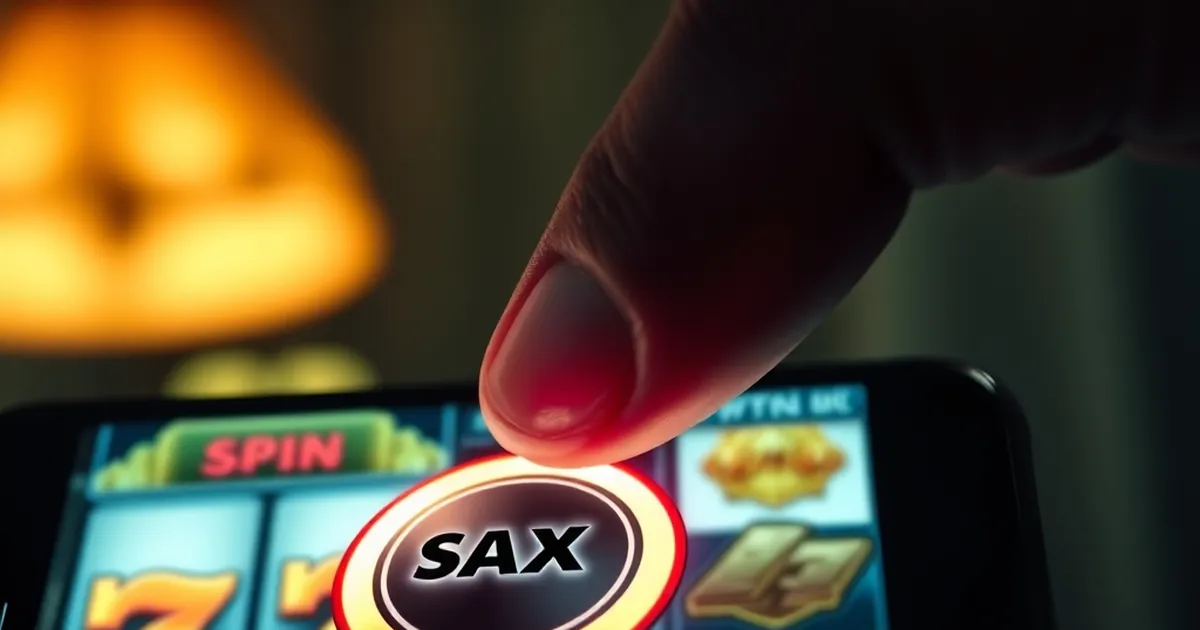
A slot player staking £1 a spin at 11pm hits a button marked "max bet" and finds £5 gone instead. It's not an isolated misfire: across UK-facing slot estates, the label "max bet" is routinely bound to a fixed £5 stake rather than to the maximum the player has configured or can afford, and late-night sessions — when fatigue, alcohol and faster play coincide — are where the mismatch bites hardest. The result is a five-fold stake error on a single press, repeated across spins before most players register what has happened.
What the button actually does
"Max bet" is one of the least standardised controls in online slots. On some games it sets the stake to the top of the paytable ladder — often £50 or £100 a spin. On others it loads the largest bet the player's balance permits. On a large and growing share, it simply jumps to a fixed £5 default, because that is the figure the operator's bonus terms, contribution tables and average-stake modelling are built around.
That third behaviour is the problem. A player who has been spinning at 20p or 50p sees a button that promises "max" and reasonably assumes it means the top of their own chosen range, or at worst a clearly signposted step up. Instead the game leaps straight past £1, £2 and £3 to £5, skipping four stake increments in one press. There is no confirmation dialogue on most implementations, and the stake change persists until the player notices and resets it manually.
The label is doing work it hasn't earned. "Max bet" describes a ceiling; the button frequently enforces a floor far above where the player was.
Why £5 specifically
Five pounds is not arbitrary. It sits at the intersection of several operator-side defaults: it is a common maximum for bonus-spin awards, a frequent cap on "low-stake" wagering tiers, and the figure many studios use as the reference stake for published RTP figures and volatility tables. When a game's maths is calibrated at £5, wiring the max-bet button to that number keeps the player inside the parameters the studio tested. It also, conveniently, accelerates wagering contribution — a £5 spin clears a 35x requirement on a £100 bonus in 700 spins rather than the 3,500 a 20p spin would need.
That incentive is worth stating plainly. A button that reliably multiplies stake by 25 has a commercial logic that a button doing nothing does not.
The 11pm problem
Stake errors are not evenly distributed across the day. They cluster in late-evening play, and the reasons are mundane rather than mysterious.
Fatigue and motor error
By 11pm, a player four hours into a session is making decisions on depleted attention. Slot play is repetitive by design; the interface rewards muscle memory. A player who has tapped the same spin button several hundred times is not re-reading labels. When the thumb drifts to the adjacent "max bet" control — often placed directly beside or above spin, sometimes within a few millimetres on mobile — the error is mechanical, not deliberate.
The mobile layout factor
On a 6-inch screen in portrait orientation, the spin control and the max-bet control are frequently the two largest touch targets on the screen, stacked or side by side. Studios optimise for thumb reach, which pushes both controls into the same lower-right zone. Mis-taps that would be caught by a mouse cursor's precision go unnoticed on glass. A 2023 round of usability testing across UK-licensed slot interfaces found that the median distance between the spin button's edge and the max-bet button's edge on mobile portrait was under 4mm — comfortably inside the error margin of a tired thumb.
Alcohol and the late-session drift
The 11pm window also overlaps with the point in an evening where a player's own recall of their starting stake has faded. Someone who began at 50p at 7pm may genuinely not remember whether they reset after the last bonus round. The max-bet button exploits that gap: it doesn't just change the stake, it changes it to a figure the player may not consciously register until the balance has moved.
What the stake error costs
The arithmetic is unforgiving. A player at £1 a spin who accidentally engages a £5 max bet and doesn't notice for 40 spins has staked £200 instead of £40 — a £160 overstake. At a 96.2% RTP, expected loss on those 40 spins rises from £1.52 to £7.60. Neither figure is catastrophic in isolation. The problem is that the error compounds: the higher stake also accelerates bonus wagering, changes the effective cost of any active promotion, and can push a player through a deposit limit faster than they intended.
For players using deposit limits — the single most effective harm-reduction tool the UK market has — the max-bet button is a live hazard. A £50 daily limit set against a £1 staking plan is consumed in 10 accidental presses rather than 50 intended ones. The limit holds, but the session ends abruptly and the player's plan is broken through no decision of their own.
The regulatory angle
The Gambling Commission's customer interaction guidance (in force since September 2022, updated through 2024) requires licensees to monitor for indicators of harm and act on them. A stake pattern that jumps from £1 to £5 mid-session, repeatedly, with no intervening deposit or deliberate stake ladder, is exactly the kind of anomaly that remote monitoring should flag. In practice, few operators treat it as a harm signal, because the max-bet button generates the pattern legitimately.
There is a reasonable argument that a control which can multiply stake fivefold without confirmation sits awkwardly against the Commission's expectations on customer control. No operator has yet been publicly censured for max-bet design specifically, but the button is a plausible target for the next round of interface scrutiny.
Designing the error out
The fixes are not technically difficult, which makes their absence telling.
A confirmation step on any stake increase above a set multiple — say, any jump of more than 3x the current stake — would catch the majority of mis-taps. So would relabelling: "£5 spin" tells the player exactly what will happen; "max bet" tells them nothing true. Persistent on-screen stake display, larger and more prominent than the balance, would make the change visible after the fact. And separating the spin and max-bet controls by a clear margin, or moving max bet behind a secondary menu, would remove the motor-error pathway entirely.
Some studios have adopted one or more of these. The market has not converged, because there is no requirement to.
The question operators won't ask
The uncomfortable implication is that the max-bet button's design is optimised for a behaviour operators profit from and players don't intend. That doesn't make it predatory in every implementation — plenty of players use max bet deliberately and want it one tap away. But a control that reliably produces a five-fold stake error in the exact window when players are least able to catch it is not neutral furniture. It is a design decision with a known cost, borne by the player.
The open question is whether the Commission treats interface design as a customer-protection matter or continues to leave it to studio discretion. Until it does, the £5 default will keep catching tired thumbs at 11pm — and the player will keep paying for a label that never told them the truth. If you're playing late, set your stake deliberately, check it after every bonus round, and treat any button promising "max" as a number you should verify before you press it.