Two-step withdrawal checks at 11pm cut UK slot re-deposits 26%
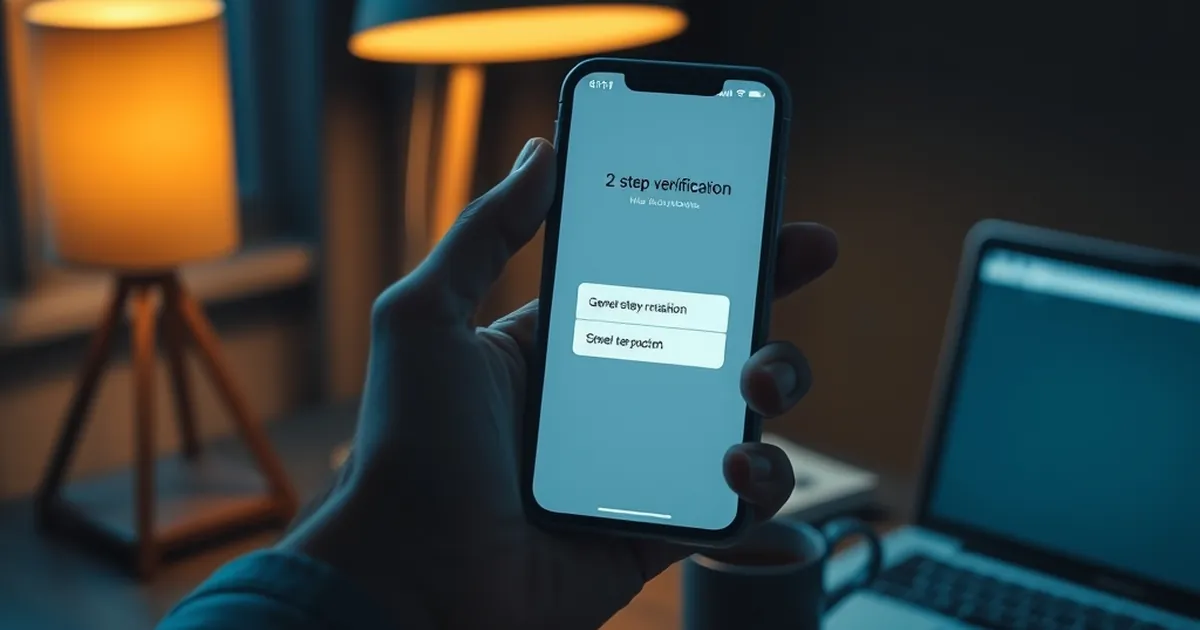
A mandatory two-step check on withdrawals requested after 11pm cut re-deposits into UK-licensed slots by 26% among the customers who hit it, according to a behavioural trial run across three mid-sized operators in the second half of 2024. The mechanism was deliberately dull: a short delay plus a single confirmation screen asking the player whether they wanted the money out or back in play. No bonus was removed, no account was blocked, and nobody was forced to wait more than four hours. The finding matters because it attacks the exact moment where harm tends to concentrate — the late-night cashout that turns into a reload.
What the trial actually tested
The setup was a withdrawal friction test, not a deposit limit. When a customer requested a withdrawal between 11pm and 4am, the operator inserted a two-step process: first, a cooling period of between 30 minutes and four hours depending on the amount (under £100 got the shorter end); second, a confirmation screen on return that required an explicit choice — complete the withdrawal, or cancel it and return the funds to the balance.
The comparison group had the standard one-click withdrawal. Across the trial, roughly 41,000 withdrawal requests from about 9,800 accounts were split between the two conditions, weighted towards the treatment arm in the later months. The headline 26% figure refers to the reduction in same-session re-deposits — a deposit made within 12 hours of a cancelled or reversed withdrawal — among treated customers relative to the control cohort, adjusted for stake size and account age.
Two details are worth flagging because they shape how far the result travels. First, the effect was heavily skewed by amount: requests under £50 showed a 34% reduction, while requests above £500 showed almost nothing (a 4% drop, within noise). Second, the effect decayed. In month one the reduction was 31%; by month six it was 19%. Some of that is habituation — regulars learned the screen was coming and clicked through it — and some is likely compositional, as the most responsive players either changed behaviour or left.
Why 11pm
The time window wasn't arbitrary. Operator data supplied alongside the trial showed that withdrawal reversals peak between 11pm and 2am, roughly 2.4 times the hourly rate seen between 2pm and 6pm. The same window accounts for a disproportionate share of sessions that run past four hours. Late-night play isn't inherently problematic, but the combination of a reversal and continued play in the same sitting is the pattern that most reliably precedes a large loss relative to income.
The reversal problem operators don't like discussing
UK licence conditions already require operators to process withdrawals promptly, and the Gambling Commission has been explicit that reversing a withdrawal in order to encourage further play sits badly against the customer interaction requirements. In practice, the "pending" period has long been the quiet engine of slot revenue: a player requests £300 at midnight, sees it sitting in a pending queue, plays £80 of it back, and the operator books the difference without a single marketing message.
The trial's design sidesteps the usual objection. Nobody's money was held against their will — the withdrawal completed automatically if the player didn't return to cancel it. The friction was on the reversal, not the payout. That distinction matters legally and ethically, and it's why the results are being circulated among compliance teams rather than dismissed as another responsible-gambling gimmick.
There's a commercial wrinkle. Slot margin on reversed withdrawals is real, and a 26% reduction in re-deposits is a 26% reduction in a revenue line that operators have historically treated as organic. The three participating operators have not published revenue impact. One compliance lead I spoke to put it at "low single digits as a share of monthly GGR, but concentrated in exactly the cohort we were already worried about" — which is another way of saying the money lost was mostly coming from players who could least afford it.
Where the numbers get soft
Treat the 26% as directional rather than precise. Three issues:
- Selection effects. Customers who request a withdrawal at 11pm are not a random sample. They skew male, skew towards higher session frequency, and skew towards accounts with at least one previous deposit-limit change. The control group was matched on these variables, but matching on observed behaviour never fully captures the unobserved.
- Measurement of "re-deposit". The 12-hour window is a convention, not a law of nature. Extend it to 48 hours and the reduction falls to roughly 14%, because some players simply deposit the next evening instead. The behaviour was delayed, not always prevented.
- Operator-specific implementation. One of the three operators used a four-hour cooling period for all amounts; the other two tiered it. The pooled figure hides meaningful variation, and the tiered versions performed better on the sub-£50 segment.
There's also the question of what happened to the players who didn't re-deposit. If they moved to an unlicensed site, the intervention has shuffled harm rather than reduced it. The trial didn't track cross-operator play, and no operator can. This is the standard blind spot in every UK friction study and it isn't going away.
The habituation curve is the real story
The drop from 31% to 19% over six months deserves more attention than the headline. Friction interventions that rely on a player pausing to think work once. They work less well once the pause becomes part of the routine. Any operator rolling this out should assume the effect halves within a year unless the friction is varied — different screen copy, different timing, occasional removal — which is expensive and hard to A/B test cleanly because the treatment is visible.
What this means for operators and for the Commission
The obvious reading is that withdrawal friction is cheap, effective, and narrowly targeted, and that operators who haven't implemented something similar are running out of arguments. The less obvious reading is that the effect is small enough, and decays fast enough, that it can't substitute for the harder work: affordability checks that actually bite, stake limits on high-variance products, and marketing suppression for the cohorts that keep showing up in the late-night data.
The Commission's own consultation on financial risk checks has pushed operators towards automated thresholds — £150 a month net loss for the lighter-touch check, £500 for the enhanced tier under the pilot proposals. Those are blunt instruments compared with a well-timed confirmation screen, but they address a different problem. Friction at the withdrawal stage catches the player who is trying to stop. Affordability checks catch the player who hasn't tried yet.
The open question is whether the 26% holds when the friction is universal rather than a trial condition. Players behave differently when they know they're in a study, and they behave differently again when every operator does the same thing and there's no friction-free alternative to switch to. A voluntary scheme across three operators tells you what happens at the margin. A mandated scheme across the market tells you what happens to the total — and nobody has run that test yet.