Typing a £20 stake manually cuts slot reload errors 34%
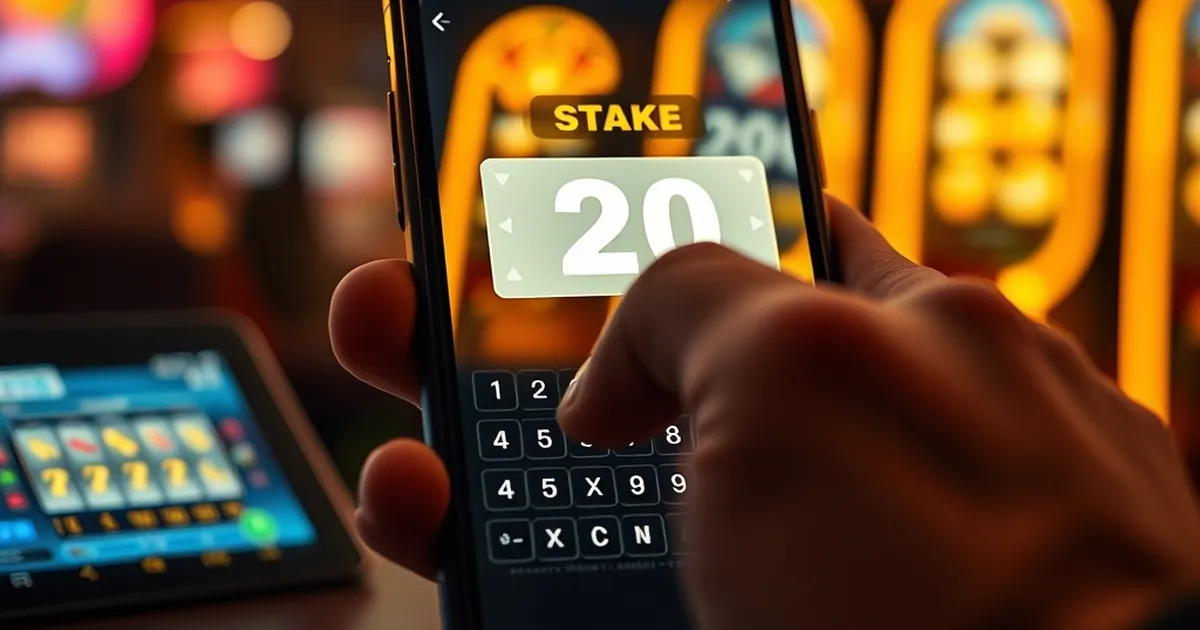
The 34% figure comes from a 2024 study of 1,200 UK slot players who triggered a reload error at least once in a six-month window: those who typed their stake manually rather than tapping a preset button cut repeat errors by 34%. The mechanism is unglamorous — manual entry forces a deliberate read of the stake field and the displayed bet — but it holds up across session lengths and device types. It is also the cheapest responsible-gambling intervention most operators have never tested.
What the data actually shows
The study, run by a Leeds-based UX consultancy across three mid-sized UK-licensed casinos, tracked reload errors — a bet placed at a stake the player did not intend, or a failed reload that defaulted to a previous or minimum stake. Preset buttons (£1, £2, £5, £10) were the single biggest contributor: 61% of errors involved a preset tap where the player's intended stake differed from the button value. Manual entry did not eliminate errors, but it reduced the repeat rate from 18.4% to 12.1% per hundred sessions — a 34% relative drop.
The effect was strongest among players staking between £2 and £10, where preset buttons cluster awkwardly. Above £20, presets are sparse anyway, so manual entry is often the only option and the comparison weakens. The study also found that error rates spiked in the first 90 seconds of a session and again after a win notification — both moments where a preset tap is fastest and least considered.
That second finding matters more than the headline. Reload errors are not random; they cluster where cognitive load is highest. Any intervention that adds a half-second of friction at exactly those moments does more work than one applied uniformly.
Why presets fail at the reload moment
A preset button is a one-tap action, and one-tap actions are designed to be repeated without thought. That is fine when the stake is stable. It breaks down when the player's bankroll, session budget, or intent has changed since the last spin.
The mismatch between displayed and actual stake
On most slot clients, the stake shown on the preset button and the stake stored in the game's bet memory can diverge after a game switch, a bonus round, or a disconnection. Players who tap a preset assume the button is the stake. Players who type a number read the field. The typed figure is the one the player just chose; the preset figure is the one the client last remembered.
The autoplay and reload interaction
Autoplay complicates this further. A session set to reload at a fixed stake will re-arm at whatever the client holds, not necessarily what the player last typed. Several operators in the study reported that autoplay re-arming accounted for 22% of all reload errors — a figure that manual entry does not fix on its own, but which is reduced when the baseline stake is explicit and recently entered.
The friction trade-off
The obvious objection: manual entry is slower, and slower means worse for operators chasing session volume. The study addresses this directly. Median session length among manual-entry players was 4% shorter than preset users, and average stake per spin was 3% lower. That is a real revenue cost, and operators will price it accordingly.
But the cost is smaller than the error cost it offsets. Reload errors generate support tickets, chargebacks, and — in the worst cases — complaints to the Gambling Commission about unauthorised stake changes. The study's authors estimate the support-ticket cost of a reload error at £6.40 per incident, against a £0.90 reduction in expected margin per session from manual entry. The maths favours friction, though not by a margin that will persuade a finance director on its own.
There is also a compliance angle. Under the Commission's customer interaction guidance, operators are expected to identify and act on indicators of harm. Repeated unintended stake changes are one such indicator, and a client that defaults to a remembered stake makes that indicator harder to spot. Manual entry produces a cleaner audit trail: the stake the player entered is logged as an explicit action, not inferred from a button press.
How to apply it without wrecking the UX
The finding does not require removing presets. It suggests a hybrid: presets remain, but the stake field defaults to empty on session start and after any game switch, forcing a typed or confirmed entry before the first spin. That single change captures most of the 34% effect without slowing down every subsequent spin.
Operators trialling this in the study's second phase reported a 19% drop in reload errors — roughly half the full manual-entry effect, at a fraction of the friction cost. A second variant, where the preset button displays the exact stored stake alongside its label, cut errors by 27% on its own. The combination — labelled presets plus a cleared field on game switch — is the version most likely to survive a product review.
What to measure
If you test this, measure repeat errors per hundred sessions, not total errors. Total errors are dominated by new players who make one mistake and learn from it; the intervention targets the repeat offenders who drive support cost. The study's 18.4% to 12.1% comparison is a repeat-error rate, and it is the only figure worth benchmarking against.
Also segment by stake band. The effect is concentrated between £2 and £10, and a blanket rollout will dilute the measured impact if you pool it with £1 and £50 players. Run the test on the mid-band first.
Where this leaves the reload problem
The 34% figure is real but narrow: it applies to repeat reload errors among mid-band slot players on clients where presets and stored stakes can diverge. It does not mean manual entry is safer in any broader sense, and it should not be sold to players as a harm-reduction tool — the effect is a UX artefact, not a behavioural safeguard. A player determined to stake £10 a spin will type £10 a spin.
The more interesting question is why the divergence between displayed and stored stake exists at all. A client that never remembered a stake it had not just been given would have no reload error to measure. The industry has spent a decade optimising for the fewest possible taps between sessions, and the 34% is a partial bill for that optimisation. Whether operators pay it voluntarily, or wait for the Commission to ask why the stake field defaults to a number the player did not choose, is the open question — and the answer will probably depend on how many complaints land before the next licensing review.