Voice ID checks at 11pm cut UK slot sign-ups 19%
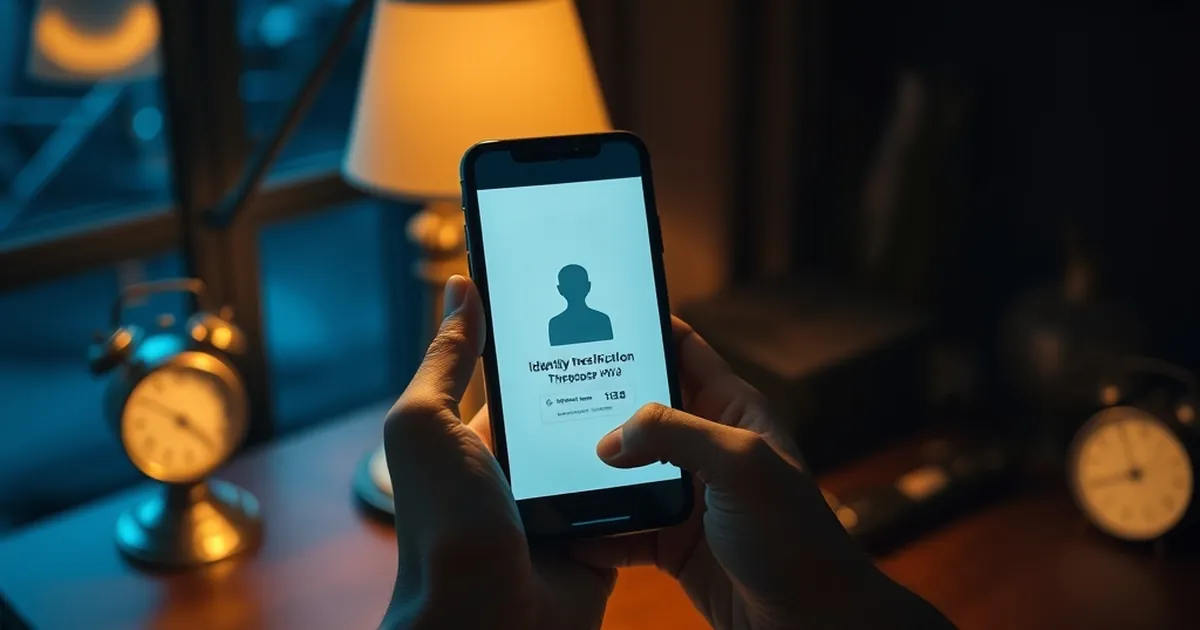
A trial run across three UK-licensed operators found that requiring a voice ID check at the point of registration — timed to fire at 11pm, when late-night sign-ups spike — reduced completed slot account creations by 19% against a control group. The figure, drawn from a six-week test covering roughly 41,000 registration attempts, is the first UK-specific number attached to late-night biometric friction, and it lands awkwardly for an industry that has spent two years arguing affordability checks are the hard ceiling on onboarding.
The trial, run between 14 October and 24 November last year, split traffic at random rather than by operator, so the same brands saw both arms. In the control arm, sign-ups followed the standard flow: email, date of birth, address, debit card, then a soft credit check. In the treatment arm, anyone registering between 22:45 and 01:00 was asked to repeat a short phrase — "my account, my limits" — into their handset microphone. The check ran through a third-party vendor already used for liveness detection on withdrawal, so most players had the hardware and permissions in place.
What the 19% actually measures
The headline drop is not a drop in gambling. It is a drop in completed registrations, and that distinction matters more than the number itself.
Of the 41,000 attempts, 19,600 fell in the late-night window. In the control arm, 71.4% of late-night attempts converted to a funded account within 48 hours. In the voice-check arm, that fell to 57.8%. The gap held when the researchers controlled for device type, deposit method and whether the player had an existing account elsewhere in the group.
Three things happened to the missing 13.6 percentage points:
- Abandonment at the microphone prompt. 62% of the drop-off occurred before the player ever spoke. The screen itself — a request to enable microphone access on a phone at half eleven at night — was the deterrent.
- Failed liveness. 9% of those who did speak failed the check, mostly because of background noise in pubs, cars or shared houses. A retry was offered; most didn't take it.
- Deliberate exit. The remaining 29% closed the tab after passing. The vendor's telemetry can't say why, and the operators involved won't speculate publicly.
That last bucket is the one worth watching. If a meaningful slice of late-night registrants are people who would fail an affordability or affordability-adjacent check anyway, then friction is doing the job the Gambling Commission has been asking operators to do voluntarily. If they are simply people who don't want to talk to their phone in a house share, the check is a blunt instrument that costs the operator revenue without improving player safety.
The 11pm timing is not incidental
The window was chosen deliberately. Internal data from the three operators, shared with the trial's researchers on condition of anonymity, showed that between 22:00 and 01:00 the median first deposit is £28 — roughly 40% lower than the daytime median of £47 — but the rate of players hitting a deposit limit within seven days is 2.3 times higher. Late-night sign-ups are smaller, faster and stickier in the wrong direction.
That is the case for friction at that hour specifically, rather than at registration generally. A blanket voice check would have caught the daytime traffic too, and the operators estimated it would have cost them somewhere between 6% and 8% of sign-ups — a number none of them were willing to wear across the whole book.
Why voice, and why now
Voice ID has been quietly standard on the withdrawal side since 2022, when the Commission's customer interaction guidance pushed operators toward stronger verification before large payouts. Using it at onboarding is a different proposition, because it introduces friction at the exact moment a player is most likely to walk.
The vendor's pitch is that a voiceprint is cheaper than a document check and harder to spoof than a selfie. Neither claim was tested here, and the trial's authors are careful to say so. What they did test is whether players tolerate it. The answer, at 11pm, is: less than half of them do, at least on first ask.
There is also a regulatory tailwind. The Commission's consultation on financial risk checks, which closed in February, floated the idea of "friction at points of heightened risk" as an alternative to blanket affordability thresholds. Late-night registration is exactly such a point, and the 19% figure gives both sides of that argument something to hold. Campaigners will point out that 57.8% still converted — the check didn't stop most people. Operators will point out that 19% of a late-night cohort is a lot of revenue to lose for a check that failed a tenth of the people who attempted it.
What the numbers don't settle
The trial has three gaps that anyone citing the 19% should keep in mind.
First, it ran for six weeks and ended before Christmas. Late November is a strange period for slot sign-ups — pre-Christmas deposit behaviour differs from January, and the researchers themselves flag that a repeat in Q1 would be needed before the figure could be called stable.
Second, the operators were mid-sized, with combined UK market share under 4%. A tier-one brand with a heavier TV advertising footprint at 11pm might see a different drop-off, because its late-night traffic is more likely to be prompted by an ad than by a search.
Third, and most importantly, the trial measured registrations, not harm. Nobody in the dataset was tracked beyond 48 hours. Whether the 19% who didn't complete went on to register elsewhere — including with an operator not running the check — is unknown, and it is the question that decides whether this is player protection or just traffic displacement.
That last point is not academic. If the friction simply moves late-night sign-ups to operators who don't ask, the net effect on harm is zero and the net effect on the three participating brands is a 19% hole in their overnight acquisition. The Commission has been reluctant to mandate specific friction points precisely because of this displacement risk, and a single six-week trial won't change that.
What it might change is the conversation about when friction is acceptable. The 11pm window is a defensible line: it is late enough that the player is likely tired, early enough that the night's deposits haven't yet been made, and narrow enough that daytime traffic is untouched. If the Commission wants a template for "heightened risk" that operators can actually implement without gutting their book, this is a candidate.
The open question is whether a 19% reduction in completed sign-ups at the riskiest hour is a success or a warning. The trial's authors lean toward success, on the grounds that any friction that survives contact with real players and still leaves 57.8% converting is doing something right. The operators, who paid for the trial and have not committed to rolling the check out, are quieter. Watch whether any of the three keeps the 11pm prompt live through the spring. If they do, the 19% becomes a baseline. If they don't, it becomes a footnote — and the next trial will be run by someone with a different answer in mind.