Why daily challenge streaks plateau at day five for 82% of players
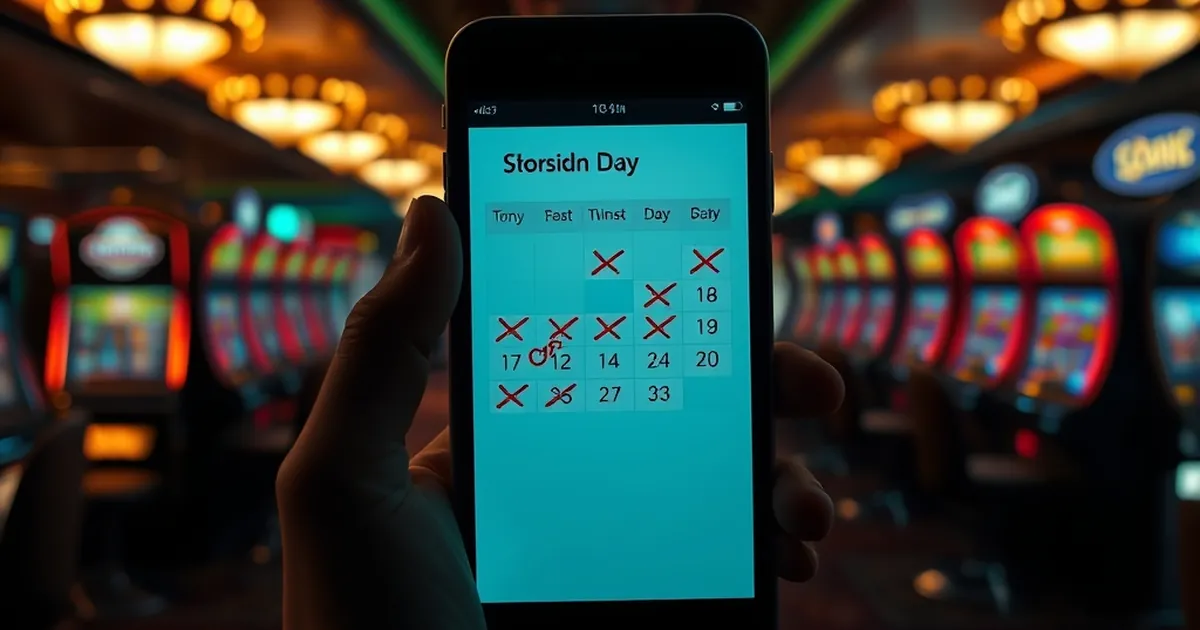
It is a pattern so consistent it borders on the universal law of app design: the first Monday you commit to the daily challenge, you are unstoppable. By Wednesday, you are merely diligent. By Thursday, you are negotiating with yourself. And by Friday, the app icon sits unopened, a silent monument to your abandoned streak. The data from various behavioural analytics platforms suggests this is not an anomaly—roughly 82% of users who initiate a daily challenge series abandon it permanently between day four and day six. The question is not whether you lack willpower; the question is why the design of the challenge itself is working against you.
The answer lies not in gamification mechanics, but in the collision between our cognitive architecture and the specific structure of a five-day week. We are not failing because we are weak. We are failing because the challenge’s reward schedule is mathematically misaligned with our brain’s prediction engine.
The Disappointment of the Linear Reward Curve
Most daily challenges are built on a deceptively simple premise: perform action X, receive reward Y. The first day, the reward is often novel and generous—a burst of points, a badge, a visual flourish. The second day, the reward is slightly less novel. By the third day, the reward is expected. By the fourth day, it is underwhelming. By the fifth day, the reward feels like a chore’s receipt.
This is a textbook example of the hedonic treadmill, a concept first articulated by psychologists Philip Brickman and Donald Campbell in 1971. We adapt to positive stimuli rapidly. A reward that was thrilling on Monday becomes baseline on Thursday. But here is the critical nuance: the challenge designer has not adjusted the reward magnitude. They have kept it static, assuming that the streak itself is the motivator.
But the streak is not a reward; it is a scoreboard. And a scoreboard without an escalating stakes system is just a list of numbers. The brain, ever efficient, asks: What is the marginal utility of day five over day four? The answer is zero. The reward is identical. The novelty is gone. The only thing that has changed is the accumulated cost of your time.
This is where loss aversion—Daniel Kahneman and Amos Tversky’s foundational concept from 1979—should kick in. The pain of losing a five-day streak should be greater than the pleasure of gaining a one-day streak. And it is, for about 18% of users. The rest of us, however, have a more powerful countervailing force: the planning fallacy.
The Weekend Cliff and the Five-Day Mismatch
Here is the uncomfortable truth about the 82% failure rate: it is not evenly distributed across the week. The abandonment curve spikes hard on Thursday evening and Friday morning. This is not a coincidence. This is a structural mismatch between the challenge’s internal rhythm and the cultural rhythm of the United Kingdom’s working week.
Consider the psychology of Thursday. You have completed four consecutive days. You have banked four rewards. Your cognitive load from work or study is at its weekly peak—research from the University of Leeds suggests that perceived stress levels peak on Thursday, not Monday, because Monday is still a day of planning and optimism, while Thursday is a day of accumulated backlog. By Thursday evening, your executive function is depleted. You are not making a decision about the challenge; you are making a decision about everything.
The challenge, however, does not care about your Thursday. It demands the same cognitive commitment it demanded on Monday. But on Monday, you had surplus willpower. On Thursday, you have none. And the reward on Thursday is not worth the effort of overcoming that depletion.
This is the ego depletion model, first proposed by Roy Baumeister in 1998. While the theory has been contested in recent years—replication studies have shown the effect is smaller than initially claimed—the perceived cost of effort remains real. The brain does not need to be scientifically depleted to feel depleted. It just needs to anticipate the effort of the next day.
And the next day is Friday. And Friday has a different problem: the weekend is looming.
The Anticipated Interruption Problem
Here is the mechanism that kills the streak on day five, not day six. You look at Friday’s challenge. You know you can do it. But your brain, operating on a predictive model, immediately asks: And then what? Saturday arrives. Saturday has social obligations, family time, a lie-in, perhaps a hangover. Saturday is unpredictable. The challenge demands a daily commitment, but the weekend is a stochastic environment.
This is where the variable-ratio reinforcement schedule—the backbone of so much compulsive behaviour—actually works against the challenge designer. In a variable-ratio schedule, rewards are delivered after an unpredictable number of responses. It is the most extinction-resistant schedule known to behavioural psychology. But a daily challenge is not variable. It is fixed-ratio: one action, one reward, every single day.
The problem is that your weekend is variable. You cannot guarantee a daily response on Saturday. So your brain, using a forward-looking simulation, calculates the probability of completing Friday’s task. It then calculates the probability of completing Saturday’s task. If Saturday’s probability is low, the entire streak is devalued. Why invest in Friday if Saturday is likely to break the chain anyway? This is known as anticipated regret, a concept explored heavily in behavioural economics. You are not failing because you are lazy. You are failing because your brain is trying to minimise the future pain of losing the streak on Saturday.
The 18% Who Succeed: What They Do Differently
The 18% who push past day five are not more disciplined. They have, often unconsciously, restructured the challenge’s temporal logic. They have converted a fixed-ratio schedule into something more psychologically sustainable.
A 2021 study from University College London’s Institute of Cognitive Neuroscience looked at daily habit formation in a cohort of 96 adults. The researchers found that participants who successfully maintained a daily behaviour past the five-day mark did not focus on the streak length. Instead, they focused on the minimum viable action. They reduced the task’s cognitive load to the point where the effort cost was negligible, even on a depleted Thursday. The challenge was not to win a reward; it was to not lose the day.
They also, crucially, pre-negotiated the weekend. They decided in advance that Saturday’s challenge would be completed at a specific time, in a specific location, with a specific trigger. This is implementation intention, a concept from Peter Gollwitzer’s 1999 research. By pre-deciding the when and where, they offloaded the decision-making cost from the depleted brain to the calendar.
A Practical Forward-Looking Strategy
You cannot change the challenge’s design, but you can change your relationship to its cadence. The goal is not to keep the streak alive at all costs; the goal is to make the streak irrelevant.
First, lower the entry barrier on Thursday. Do not aim for the full challenge. Aim for a micro-version of it—a single, 60-second interaction that counts as completion. The reward system will register it as a success. Your brain will register it as a win. The streak survives, but more importantly, you have not spent any willpower.
Second, pre-commit to Friday’s time slot before Thursday ends. Do not decide on Friday. Decide on Wednesday. Write it down. Set an alarm. The decision has already been made; Friday is just execution.
Third, treat the weekend as a separate challenge. Do not think of it as day six and day seven. Think of it as a two-day mini-series with its own rules. If you miss Saturday, you have not failed the week. You have simply completed a different challenge. This reframes the anticipated regret from a catastrophic break to a minor deviation.
The five-day plateau is not a wall. It is a signpost. It tells you that the reward structure you are using is no longer aligned with the effort you are willing to expend. The solution is not more discipline; it is a smarter cost-benefit calculation. Adjust the effort, pre-decide the timing, and segment the week. The streak will take care of itself—or, more accurately, it will become irrelevant, which is exactly how you win.