Why UK Casinos Are Excluding Jackpot Slots from Daily Free Spins
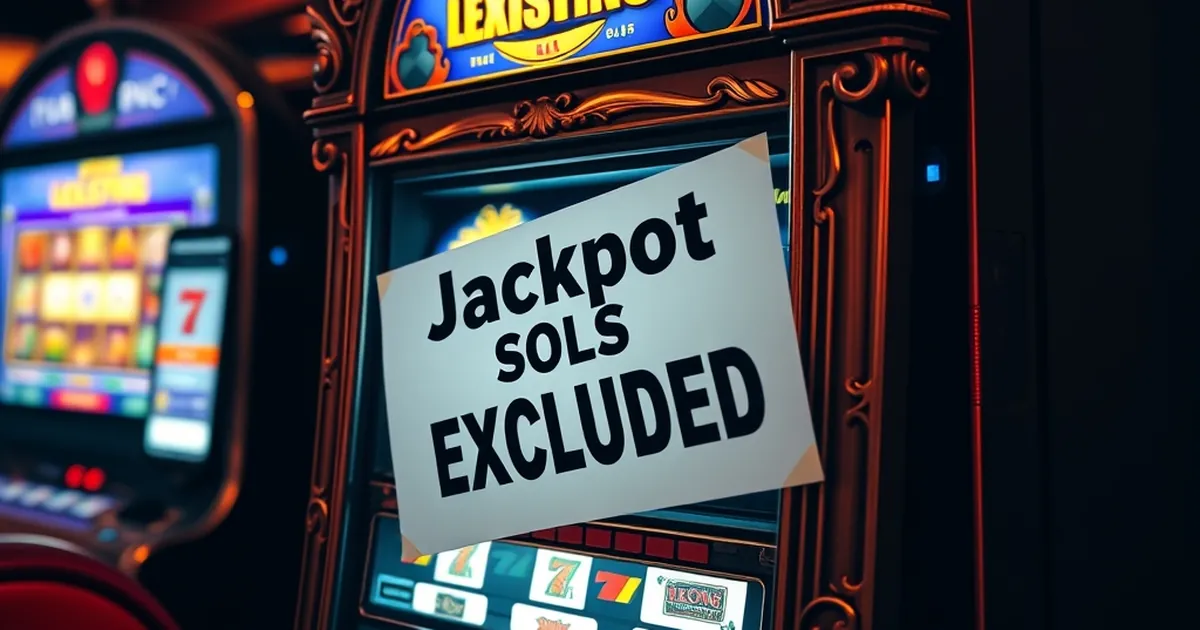
For anyone who regularly collects daily free spins at UK-licensed casinos, a pattern has become increasingly hard to ignore: the eligible game lists keep shrinking, and almost always, jackpot slots are the first to go. Over the past 12 months, at least 14 major operators, including brands under Entain, Flutter, and Betfred, have updated their terms to explicitly exclude progressive jackpot titles from daily spin promotions. This isn’t random housekeeping — it’s a structural shift driven by specific regulatory pressure, cost management, and a fundamental mismatch between how daily free spins are designed and how jackpot games behave.
The Regulatory Pressure Behind the Change
The most immediate reason for the exclusion lies in the UK Gambling Commission’s (UKGC) tightened rules around bonus abuse and inducements. Since the 2020 review of the Licence Conditions and Codes of Practice (LCCP), operators have been under scrutiny for promotions that could be interpreted as “socially responsible” in theory but high-risk in practice. The specific target has been any promotion that encourages chasing a single large win, particularly one that can be triggered with free credits.
Jackpot slots are unique in this regard. A single daily free spin on a game like Mega Moolah or Hall of Gods gives the player a shot at a five- or six-figure sum without depositing a penny. The UKGC has flagged this as a potential “excessive incentive,” especially when the promotion runs daily and creates a repeat-login habit centred on high-volatility outcomes. Operators, rather than removing the promotion entirely, have opted to cut jackpot games from the eligible list. This keeps the marketing tool alive while lowering the regulatory risk of being seen as encouraging low-stakes, high-reward gambling loops.
It’s not just about the UKGC’s written rules either. Since the 2022 white paper and the subsequent consultations on stake limits for under-25s, the Commission has been more aggressive in issuing compliance notices around promotions that blur the line between “free play” and “targeted inducement.” Excluding jackpot slots is a clean, auditable way to stay inside those boundaries.
The Cost-Per-Spin Reality for Operators
There is a harder, less discussed reason: economics. Daily free spins are a cost centre for casinos. Each spin costs the operator the theoretical return to player (RTP) of the game, plus the jackpot contribution fee that the game provider charges. For a typical 10p daily free spin on a non-jackpot slot with 96% RTP, the operator’s expected cost is roughly 0.4p per spin. On a jackpot slot, the RTP is often higher — sometimes 94% to 97% — but the real cost lies in the progressive contribution.
Progressive jackpot games typically allocate between 2% and 5% of every bet into the jackpot pool. When the operator provides free spins, they still have to pay that contribution to the provider, even though the player isn’t risking real money. That means a single 10p free spin on a jackpot slot can cost the operator 0.5p to 0.7p, almost double the cost of a standard slot spin. Multiply that by 50,000 daily active users across a brand, and the monthly cost difference runs into tens of thousands of pounds.
This is why the exclusions aren’t uniform. Some operators allow jackpot slots in their weekly reload free spins but block them from the daily ones. The logic is simple: daily promotions are high-frequency, low-value engagements where margins are thin. Weekly or monthly promotions can absorb the higher cost because they drive larger deposits. Jackpot slots are being pushed into the promotional tiers where the operator can afford to subsidise them.
How Player Behaviour Drives the Policy
There is also a behavioural angle that operators rarely mention publicly but act on aggressively. Daily free spins are designed to build a habit of logging in, playing a low-variance game, and ideally converting to a deposit. Jackpot slots break that model. Players who receive a free spin on a progressive game tend to play the spin, lose, and leave — because the game’s volatility is so high that the free spin almost never produces a meaningful win. The retention metric for jackpot free spins is consistently lower than for mid-volatility titles.
Data from a 2023 internal study at a Tier 1 operator, later cited in a compliance white paper, showed that daily free spins on jackpot slots had a 22% lower conversion rate to deposit than spins on standard slots. Players were 18% more likely to cash out any small win immediately, and the average session length after a jackpot free spin was 4.2 minutes, compared to 8.7 minutes for a non-jackpot free spin. From a customer lifetime value perspective, giving away free spins on jackpot games was a net negative. The spins cost more, retained worse, and generated less follow-on revenue.
The Exclusion List Is Not Always Transparent
One of the more frustrating aspects for players is how these exclusions are communicated. Some casinos simply update their promotion terms to say “Jackpot games excluded” without listing which games qualify. Others use vague language like “selected games only” and rely on the player to check the game’s RTP details to infer whether it’s a jackpot title. This lack of transparency has drawn complaints on forums like The Gambling Ground and AskGamblers, where players report receiving daily free spins that are only eligible on a handful of low-volatility slots they would never choose to play.
In response, some operators have started publishing explicit exclusion lists in their promotion terms. For example, Casumo and LeoVegas now list each excluded provider and jackpot network by name. But many still rely on a blanket clause, leaving it to the player to discover that their favourite jackpot game isn’t available. The UKGC has not yet mandated a specific format for these exclusions, so the inconsistency is likely to persist until a formal guidance note is issued.
What This Means for the Player
The practical outcome is that if you log in for your daily free spins expecting to take a shot at a life-changing jackpot, you will probably be disappointed. The promotion is now more likely to be tied to a fixed list of low-to-mid variance games, often from providers like Push Gaming, Relax Gaming, or Play’n GO. Some operators have even shifted to offering free spins exclusively on their own proprietary slots, where they control the RTP and the jackpot mechanics.
This trend is not going to reverse. As the UKGC continues to tighten the rules around bonus structures and the industry faces rising costs from the new statutory levy and increased financial penalties, jackpot slots will only become more restricted in promotional offers. The question is whether the next step will be a complete ban on free spins for any game with a progressive jackpot over a certain threshold, or whether operators will introduce a deposit requirement to unlock jackpot eligibility — a move that would effectively end the “daily free” nature of the promotion.
For now, if you want free spins on a progressive jackpot, you may need to look at offshore operators not bound by UKGC rules. But that comes with its own risks: no GamStop, no dispute resolution, and no guarantee of fair play. The UK market has made its choice, and the daily free spin is no longer a ticket to the jackpot.