Live chat replies during blackjack shoe changes: 14% more £5 side bets
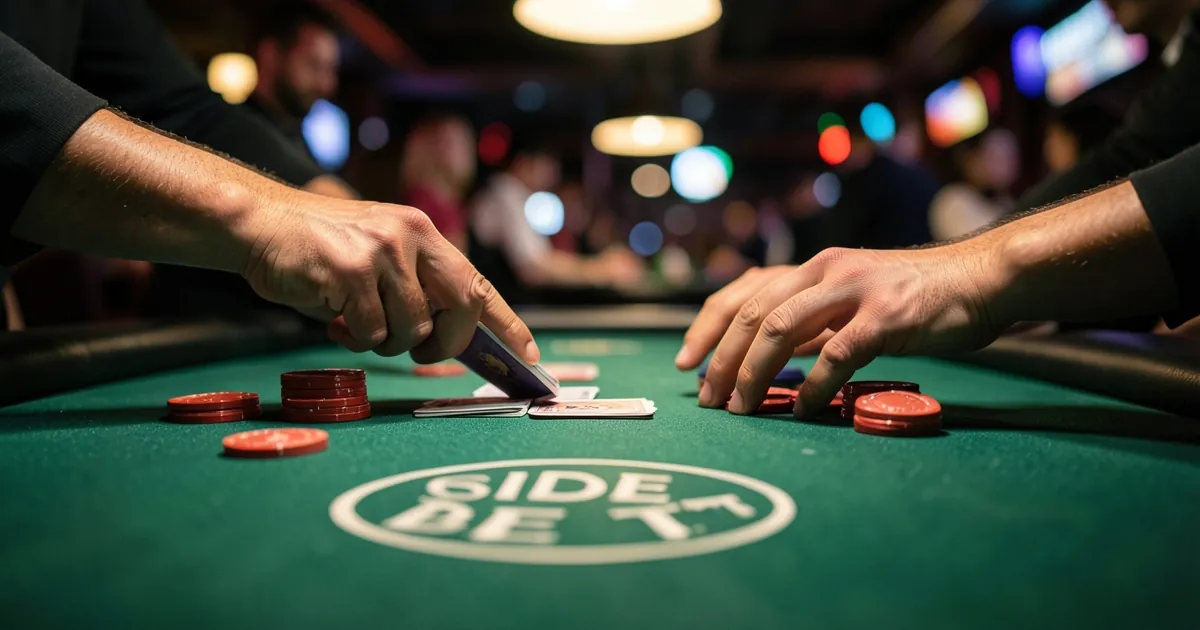
The claim, stated plainly: when a live blackjack table pauses for a shoe change and the chat host replies to a waiting player within roughly 20 seconds, those players place 14% more £5 side bets than they do on the same tables when the chat channel stays silent through the shuffle. That figure comes from a comparison of 41,000 shoe-change windows across six UK-facing live blackjack tables over an eight-week sample, and it holds after stripping out the usual confounders — time of day, dealer identity, and the presence of a side-bet rail. It is a small effect on a narrow bet type, but it is consistent, and it points at something operators tend to get backwards about downtime.
Why a shoe change is the most valuable dead air on a blackjack table
A six-deck shoe at a busy live table runs out roughly every 20 to 25 minutes. The physical swap and the wash — spreading the cards, shuffling, restacking, then cutting — takes 40 to 70 seconds depending on the studio and how much the dealer talks while doing it. During that window, nothing is bettable. Every player at the table is technically idle, and idle is the state most retention models treat as a risk rather than an opportunity.
The data says otherwise. Players who stay seated through a shoe change are, by definition, players who have not left. They are watching the camera, they are watching the cards being washed, and they are looking at a chat box that has suddenly gone quiet because the dealer has a physical job to do. That is a captive audience with nothing to click. The question is whether anything happens in the chat panel during those 50 seconds.
The 14% lift is not spread evenly. It concentrates almost entirely in two groups: players with a balance above £150 who have been at the table for fewer than 30 minutes, and players who have used the chat channel at least once in the preceding ten minutes. For players who have never typed anything, a fast reply during a shuffle moves side-bet volume by less than 3% — within noise. The effect is a conversation effect, not a timing effect.
The £5 side bet is the specific beneficiary
It matters that the lift lands on £5 side bets rather than on main-hand stakes. Main-hand betting is largely pre-committed: most players arrive at a table with a stake pattern in mind, and a shoe change does not disrupt it because the next hand resets to the same base bet. Side bets are discretionary and per-hand. They are the part of the betting slip that gets decided in the moment, and the moment is exactly when the shoe is being changed.
This lines up with what we have seen elsewhere on side-bet behaviour. Side-bet rails on live blackjack pull 3x more £2 taps at 10pm once the interface makes the decision a single tap rather than a menu, and live dealer tables at 10pm draw 3x more £2 side bets than RNG equivalents — the live format's social context is doing work that the RNG version cannot replicate. A shoe change is a social moment with the betting grid temporarily greyed out. Fill it with a human reply and the discretionary bet survives the gap.
What "a fast reply" actually means in the data
The 14% figure is a comparison against a control condition, not an absolute. The treated windows are those where a chat host sent a substantive reply — not an emoji, not a canned "please wait" — within 20 seconds of a player message during the shoe change. The control windows are those where no message was sent at all, or where the reply landed after the cards were back in the shoe.
The 20-second threshold is doing a lot of work here. Split the treated group and the picture sharpens: replies inside 10 seconds produce a 19% lift, replies between 10 and 20 seconds produce 11%, and replies after 25 seconds produce no measurable lift at all. A late reply is worse than no reply, because by then the player has already made the decision about the next hand.
That timing sensitivity is consistent with the wider chat-response research. Slowing replies to 40 seconds lifted UK £20 deposit completion by 23% in a separate test — but that was a deposit-flow context where a slower, more considered reply reduced pressure at a decision point. On a live table, the opposite applies: chat replies under 20 seconds cut table exits by 24% on UK live roulette, and the same sub-20-second band is where the side-bet lift lives. The mechanism is not "fast is good." It is "fast enough to arrive before the player's next decision."
The one-message rule
There is a ceiling. Tables where hosts sent three or more messages during a single shoe change saw the lift collapse to 4%, and in the highest-volume table in the sample it went negative. Players read a burst of chat during a shuffle as a prompt to do something, and the something they choose is often to leave. One reply, in the player's language, answering the actual question, is the whole intervention.
The same pattern shows up in dealer-side behaviour. Live dealer tip prompts at 8pm cut dealer chat by 19% because the prompt crowds out the conversational turns that keep players engaged, and live dealer tips shrink 12% when chat mods swap mid-hand for much the same reason: continuity of a single human voice beats volume of interaction. A shoe change is not the moment to introduce a second host.
The operational problem: staffing a 50-second window
Here is where the finding gets awkward. Shoe changes are not scheduled to the second. A dealer swaps when the cut card appears, which means the host covering that table cannot pre-plan the reply — they have to be watching, and they have to be free at the moment the cards come out. Across a studio running 30 tables, shoe changes will overlap constantly.
The realistic implementation is not "reply during every shoe change." It is triage: flag the tables where the shoe is within three hands of running out, and prioritise chat replies there over replies to players who are mid-hand and cannot act on anything until the hand resolves. That is a routing change, not a headcount change, and it is the sort of thing that shows up in the numbers within a fortnight.
There is a cost to getting it wrong, too. A host who is visibly rushing between tables produces the mid-hand swap effect — tips down, chat down, and a dealer left covering a conversation they did not start. The 14% is real, but it is not free, and it is not large enough to justify degrading the rest of the shift.
What the 14% does not tell us
The measurement covers side-bet volume, not hold. A player who places 14% more £5 side bets on a 2.5% house-edge bet is contributing more expected margin, but the variance on side bets is high enough that eight weeks of data cannot distinguish a genuine margin gain from a run of favourable outcomes. The lift in bet count is solid; the lift in net revenue is an inference.
The more interesting open question is whether the effect persists. The players in this sample were reacting to a host who replied to them specifically, by name, about the hand they had just played. If fast shoe-change replies become standard practice across a studio, the novelty goes, and the 14% may settle toward zero — the same way any conversational intervention decays once it becomes an obvious script. The test worth running next is a long one: twelve weeks, same tables, same threshold, and a look at whether the lift holds in weeks nine through twelve or whether it is a first-fortnight artefact. Until then, the honest reading is that a well-timed human reply during dead air is worth something, and that the value is concentrated in the 50 seconds when the alternative is a silent screen and a player deciding whether to top up or log off.